
Where is Akunna?
Ebube Okwuasaba
Background
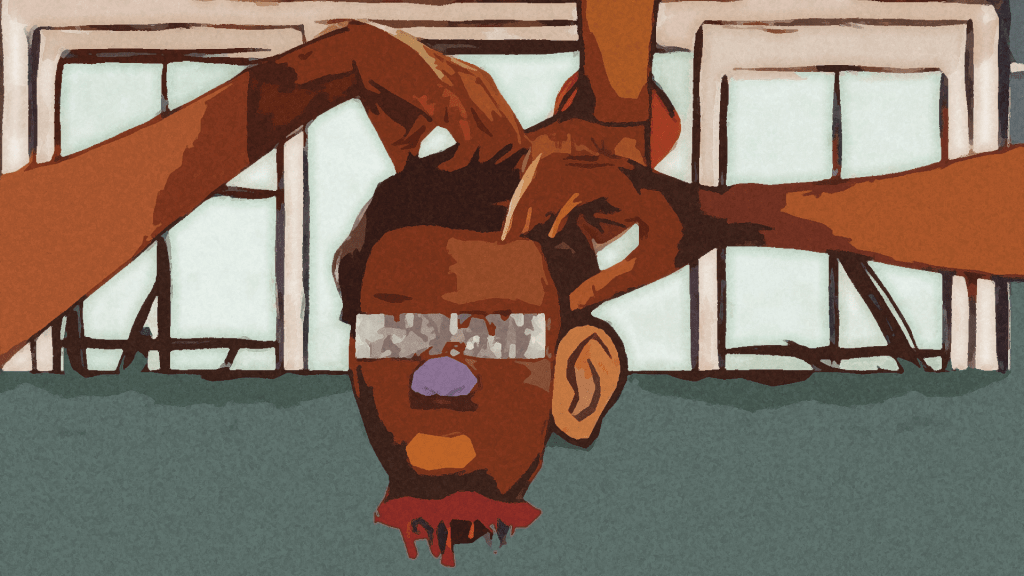
On September 19 1996, 11-year-old Anthony Okoronkwo was drugged and decapitated by money ritualists inside Otokoto Hotel. This is dedicated to the victims of the Ritual Killings at Otokoto Hotel, 1996.
AFTER HOURS OF lying face upward, lost in thoughts and staring into blank space, merely admiring the peculiar spiral designs laced over the ceiling, I mustered a little strength to sit up finally. The sterile white sheets echoed the numbness in my limbs. Sleep, which should have embraced me after the exhausting flight and the even more draining situation, refused to visit. It was 3:17 a.m. I tried to reposition the pillows I had spread across the bed in the little time I had closed my eyes to sleep.
“These cheap hotels never cease to amaze me,” I whispered, struggling to put on the bulb switch beside the bed-head.
My eyes immediately met with the mirror adjacent to the bed when my feet eventually touched the ground. I did not notice it when I came in last night. I looked miserable. It was because I had been jaded with so much thinking all night. My late-night journey to Owerri also did not help; now, everywhere I looked, the hotel room mocked me. The two plush towels shared a laugh, and the double bed exaggerated the empty space. Motivated by my thoughts, I got up and hastily reached out to my travel bag to pick up the paper I had neatly folded in one of the many compartments. It was the last letter Akunna sent to me.
HELLO Bros! Hope you are doing WELL? The orientation camp was thought-provoking most of the time but we are finally done. I’m lodged at a hotel now… Please, I would need your help now with that THING we discussed earlier so I can settle in properly. You know I love you, thank you, bye, kisses!
Akunna always had a funny way of scribbling her words whenever she wrote to me, particularly when she wanted financial assistance. I loved it every single time. She was the only family I had left; our parents passed away the previous year in a motor accident. It did not take so long for me to realise then that I was no longer a fraternal figure; I was now fully responsible for her, like a father. The good thing that followed this was that I worked at the Industrial and General Insurance Plc, one of the country’s most prominent insurance companies. In other words, it had been relatively easy to manage the situation.
Two months had passed since I sent a letter in response to Akunna, but I had yet to receive feedback. It was unlike Akunna to leave me hanging with no reply. It was 1996, and while the postal service in Nigeria may have improved following the deregulation of NIPOST, it still took a few days before a letter travelled across some states. For this reason, I delayed my worries for an extra month before I filed a complaint at the postal office. After retracing my mail, I was eventually informed that both the letter and the little money I sent were received and confirmed at the destination point. This was why I had to take the long journey of coming to Owerri myself in search of Akunna. Her letter gave me only one search point: Assumpta International Primary and Secondary School. It was supposed to be her primary place of assignment after completing her NYSC orientation camp programme. I remember having mine at Okada in Edo state, and I still retain my argument that the only purpose those three weeks of camping truly served me was to make a few new friends. I consider every other aspect of the programme superfluous.
“Yes, O! She was supposed to resume work last month, but I only saw her during the first week of registration. She did not even tell us she would not be coming again. Now we have to…”
I zoned off as the headmaster continued speaking. I never got to know his name as everyone in the town regarded him as Prof. He was tall and spoke with a faint British accent, primarily vocal when he made certain expressions. One could easily observe the map of wrinkles that creased his forehead by merely looking at him. However, his appearance did not match his vitality.
“Wait, Prof! You spoke with her?” I retorted right in the middle of his long speech.
“Yes. We communicated via landline on the 20th of July. My records will show that. She had access to the landline at the hotel where she was lodged. Our last conversation was about accommodation, but I did not hear from her again. Maybe it…”
Of course, I zoned off again as he spoke. At this point, however, I was getting worried. That meant that Akunna had not returned to the school for almost two months. The only bright side to the situation was that I was getting some critical information. He may have looked old, but he was detailed in his reports, giving me the date and time of each event as he recalled them. I only hoped they would be enough to find Akunna.
“Did she ever mention the hotel to you?”
“Ah, yes! She lodged at the popular Otokoto Hotel. Not very far from our school if you take one of those buses up north.” He said, gesturing at the routes I would have to take.
“Thank you, Prof! You have been really helpful, but I have to go now.”
I had never been to Owerri, but it was always easy to navigate any location as long as I was given adequate direction. Experience also taught me that in Nigeria, you have to try as much as possible not to let the average passer-by know that you are a JJC, Johnny Just Come. So even when I was seemingly lost while walking, I still acted like I knew what I was doing until I could cheekily request more direction from anyone around. Unlike what the professor said, it was a thirty-minute drive and a bit farther than he had described. Nonetheless, it was still quite easy to locate.
“…J-E-P-H-T-H-A-H. THAT’S THE proper spelling.” I said, pointing down at the Logbook where my details were being scribbled. The receptionist had initially misspelt it, so I had to correct it. Not everyone knew how to spell my name properly, so this experience no longer phased me. However, spelling my name as ‘Gefta’ was a bit funny to me. As soon as I made the necessary payments at the receptionist desk, one of the attendants who happened to have been sitting behind the desk got up quickly and walked towards me, gently snatching my luggage and leading me through the hallway. As we marched through the hallway that day, I suddenly developed cold feet. Still, I solidified my decision to stay a few days. I considered it more yielding to slowly evade the space to discover more about Akunna’s whereabouts than to badge in as though I were a police officer. After all, it probably would have been a dumb thing to ask random people around about some girl they may not know about. The hotel, Otokoto, as they called it, was located in an upscale area of Owerri and was quite bigger than every other building that surrounded it. It comprised three buildings (three, five and six stories each, one behind the other). It was owned by a certain Chief Vincent Duru, a buoyant and clearcut man with precise features, very soft black hair, and a compact stature. He was popularly known by his nickname, Otokoto, which he had, in turn, labelled his hotel with.
After spending a day in the hotel, I perceived that my earlier plan to evade the space slowly would not be as effective as I imagined. So, I eventually came around to do what I thought would be dumb: asking people around. It was difficult as a Nigerian to ask a stranger a question without a long prelude of apologies, and I always wondered why we spoke that way. My father once remarked that it was because the average Nigerian was always defensive considering our history with violence, so we are often conscious of avoiding unnecessary confrontations.
“Sorry, don’t mind me. Please, have you seen this girl anywhere around?” I said, holding up a picture of my sister at every juncture to the receptionist, the security guards, the cleaners and other common workers. I did not get anything useful from most of their replies. They all denied ever seeing that face.
“My pikin! Dem nor dey ask that kind question for this hotel o.” This was what one of the cleaners told me. She was a bit elderly compared to the others I saw around, playing her “I am a mother” card. The receptionist, however, gave me an idea of my next line of action. When I questioned her, from the moment I put up the picture, there was a sudden fear that could be identified in her tone and body language, as though I should quickly put down the picture. Then I realised that if I could access the hotel Logbook, I would surely get something out of it. Luckily for me, the book was always out on the table, and there was usually no one at the desk during their slow change in shifts. Working at an insurance company gave me the skill of paying stark attention to details, and it turned out it was an essential survival skill, as my supervisor would always yell out when we made a few errors at work. I had to use two days to study their schedule, and just like that, one day of searching for Akunna was already turning into a week at Owerri. This was why I had to be more daring in my approach. The next day, just at about 5 a.m., when the cocks began to crow, I got up to execute my plan to procure the logbook. The room I lodged in was a cubbyhole, barely bigger than some walk-in closets. Getting up from the bed, with only a few steps, I walked towards the door, hid at its hinges and waited until the shift change started before I left my room.
The fluorescence of the hallway thrummed in symphony with the nervous drumbeat in my chest that morning. Up ahead, the shift change was ongoing. The receptionists were leaving, their laughter bouncing off the walls and echoing in space. Get in there, skim through and get out. That was my mission: to read the Logbook unseen and unheard. I was not scared because I was doing something wrong; I was scared because my stay at the hotel all the while had proven it to be a truly eerie place.
With my face bent down, I hurried down to the desk, and at once, I grabbed the book.
As I skimmed through the book, a girl with curly hair came in, her eyes locking with mine. I did not know her and kept my cool because she had no immediate reaction. Silence peeked as her steps kept on increasing as she walked towards me.
“Please, I want to book for a…”
I sighed in relief. She was just a customer.
“Sorry, you would have to wait a little. I’m not on shift now.” I mumbled, not looking up.
After a couple more seconds of flapping the pages, this time more hastily, I saw her name, Akunna. It was just as Prof said: the 20th of July was the last day she checked in, but she never checked out afterwards.
“Please, I am still waiting,” the lady said, sitting, watching my restlessness.
I mumbled a response and hurried out, the doors closing behind me. I took a deep breath of the morning air, feeling the tension drain from my shoulders. I did not know where to go again or who to ask. Where was Akunna?
The following day, I sat by the window, the morning sun creeping in. I had given up hope. The only thing I could do was to file a missing person report at the police station and give them all the details I had gathered. As I sat in despair, I saw a man accompany a young boy into the hotel premises. I had seen him come in with two different girls earlier and thought it was just his brazen lifestyle. This time seemed different. The young boy looked no older than nine. He was probably a peddler, as I could identify from the tray of groundnuts beside him. The man who had brought him in and given him a bottle of Coca-Cola observed the boy from a safe distance. Perhaps he only wanted to provide the boy with a drink; I thought to myself as I fell back on the bed, falling asleep shortly after. I woke up from a very short nap and got up after a few minutes with a sudden craving for the groundnuts I had seen earlier. I looked out the window to find the young boy asleep and thought to purchase some from him. After a little delay in searching for the key to my room, I walked down the stairs but could not find him anywhere. Slowly searching about the premises, I identified his tray of groundnuts. Initially, I was unsure, but I saw some fresh groundnuts in the waste dump beside the building. That was when I decided that I was done in Owerri.
I sluggishly turned back to go inside with slumped shoulders, weighed down by more than just the heat, and climbed the stairs that led to my room. Reaching the steps, I paused, catching my breath. The climb was slow, punctuated by heaving sighs. As I billowed in despair, I could not help ignoring the pungent stench accompanying the man who zoomed past me. Looking more sternly, it was the same man from before, carrying a black polythene bag and making his way to the road. I had not recognised him at first, not until he had already stopped an Okada. Before I ran out to question him, he was far gone. An hour later, after submitting my report at the Police station, I was already on the next bus to Benin City. The worn leather of the bus seat cried as I sank in, my bag digging into my ribs. I glanced through the window and could not believe I was leaving Owerri without Akunna. Getting closer to Otokoto Hotel, the bus halted as a crowd submerged the hotel, people with sour looks and hands on their heads in shock. I could also see a good number of police officers at the scene. As the bus lurched forward, inching its way through the crowd, I stretched out my head through the window to find out what was happening. There was an elderly woman, wailing, her voice lilting over the murmurs, “They have killed him o! Poor boy.” Then I saw him again, that same man who had walked past me in the hotel. He was on the ground with what looked like human body parts beside him.
“Driver, please stop the bus! I said, squeezing myself through the little space that led to the door at the growling discomfort of other passengers. Their insults did not matter to me then, nor did the money I paid for the journey. I needed to get down and affirm whether my thoughts were accurate, though I hoped they were not. I walked up to get an immediate view of the scene. The man had begun confessing as one of the police officers, a petite man whose face immediately corrected any wrong notion about his stature, carefully emptied a Ghana-must-go bag beside him. Many items followed the ransack as he selected the items one after the other: clothes stained with blood, handbags, and slippers. Staring at the items, I no longer knew if I hoped to see anything. He held the bag high, invertedly, after some minutes of searching the bag to void it of anything that could still be inside. It was also a means to show the crowd that nothing was left in it. As he shook it, an envelope and some photographs came flying down. I could not identify any of the photos, but I recognised the envelope. It was my last letter to Akunna, stained with blood. At once, placing my hand in my bag, which I had hugged all this while tightly, I brought out the picture I had of Akunna and ran towards the man as I fell to my knees with the picture held up to his face.
“Please…please, where is this girl now?” I said, trying to hold back my tears.
Our eyes locked. He jolted his head, a response that needed no further words. At that moment, I became filled with grief I could not mask. I grabbed his neck with both my hands, filled with unfamiliar emotions, before the police immediately rescued him.
“Where is Akunna? Where is my sister?” I cried out, refusing to let go.
Ebube Okwuasaba is a Nigerian writer passionate about the African literary scene and community, and he enjoys his flexibility in writing in and beyond it. He has written for magazines and journals, such as Opinion Nigeria and Academia. David won the 2023 Judelucan Writer of the Year Award and is the author of A Trial Run: A Flash Fiction Series. He is a graduate of philosophy and the lead director of the Penscafe Writers Community.
 lọ́unlọ́un