The Skeleton
Karen Jennings
Background
During his famous 1487 journey around the African coast, Bartholomew Dias left behind four enslaved women at various points to advocate for trade with the Portuguese. He never returned for them. In 1926, an amateur archaeologist found one of these women’s bones, which he displayed in his museum.
IT WAS THE skeleton he’d been known for and which was her earliest memory, though she’d heard and read so much about it and seen it so often over the years that it was hard to be certain what belonged to that first memory and what had been added with time. Even now, she still found herself going to the history section in second-hand bookshops, picking out books on South African history, and searching through the index for his name. She gained comfort in the sight of it and that grainy old black and white photo of him that she still sometimes found in earlier editions, a young man in his suit and tie standing beside the skeleton, where it lay curled up in the same position in which he said he had found it. The smell of his little museum came to her, dust and old things, displayed in two large rooms he had built on to the side of the house, with all sorts of bones, stones and shells that he had collected, and the donations from the people of the bay town where he lived; old toys and clothes, sailing boats, photos, dishes and kitchen gadgets, fishing nets, and tools with which to repair them. Open to the public six days a week, her grandmother sat there, knitting and crocheting in the room, damp and cold as it was in the winter so that, at last, she had put her foot down and said she would no longer do this, sitting there day after day, going mad with boredom and cold, and for what? Often there was not even a visitor for more than a fortnight. After that, the museum was open only three days a week or at request.
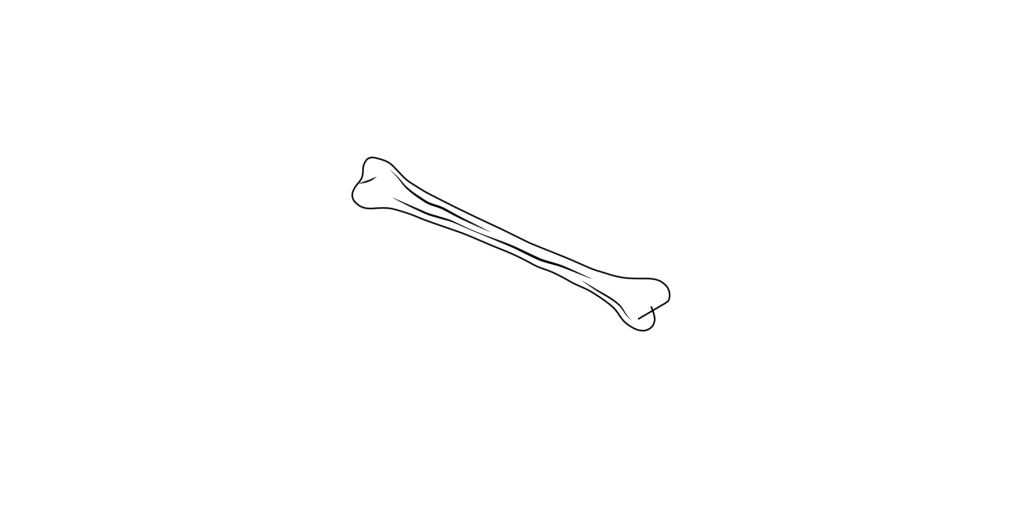
They would visit her grandparents during the holidays, driving half a day with her brother, sister, and herself in the backseat, talking about the skeleton all the way, telling stories about it, and saying how they had seen its ghost. One year, she had an oral to prepare for after the Easter holidays. It had to be on something interesting, anything, as long as it was interesting, and she had asked her grandpa if she could do it on him and his skeleton. She had already told everyone at school about it, but they hadn’t believed her, and Grandpa said of course and took her on a private tour, just the two of them. He took a small bone from the display, put it in her hand, and told her she could borrow it and show it to her friends but to be careful and bring it back.
Standing in front of the class and making a big deal about it because they had learnt about Bartholomew Dias in History the term before, about his journeys to try to get round the Cape, and what their teacher hadn’t told them, she said, was that he’d taken on board four slave women from the coast of Guinea, and then loaded them up with gold, silver, copper and stuff and then dropped them off at various points along the African coastline to show the local tribes the kinds of things the Portuguese wanted. He told the women he’d come back for them so that they could say to him what they had learnt about the lands, the people and gold and stuff, but he never did, leaving them behind for good, all of them except the third one because she had already died somewhere along the way and been thrown overboard. She explained how her grandfather had found the fourth woman. He was an amateur archaeologist, which meant he dug up old things and found her sticking out of a sand dune. He saw by her bones that she could not be one of the local people because she was too strong and big to be one of them. He realised, because he knew a lot about the history and the place and he did all sorts of tests and things, that she must have been Dias’s slave woman. He could also tell from the skeleton that she had had two children.
“Bones are like books,” she said, “you can read the stories in them.” She handed the little bone to a girl in the front row, letting her pass it to the rest of the class. Then she said the bit that her mother had made her add: “Think of this poor woman who was taken from her home and thrown into a wilderness and told she’d be fetched, but when and how could that happen with no way of communicating? That poor woman, think of her, alone, afraid and far from home.” Her mother always said things like that when they went into the museum or spoke of the skeleton.
And her grandfather would say, “Well, Dias didn’t find her, but I did, and she’s safe now.” Though, she wasn’t all that safe. She was displayed on an open table in the centre of the first room; anyone could reach out and put their hands on her despite the PLEASE DO NOT TOUCH sign. Several bones went missing over the years.
When her grandfather died, her grandmother confessed to being sick of that bloody museum, the bane of her existence for all those decades, and she hated it, hated it, and wanted to be rid of it. The house was sold, along with the museum, and her uncle donated the contents to other small museums, though the skeleton went to the University of Cape Town—that Cape which Dias had rounded and where he went missing in a storm in 1500. Little notice was taken of the museum’s closing. The country was busy with its first democratic elections at the time, and too much was going on in the present for anyone to be reporting about that kind of distant past.
SOME YEARS LATER, she went on to study art at the university, and though she looked, she had not been able to find the skeleton; not knowing how to go about it, asking lecturers in departments with which she had no other contact, science and biology and medicine, trying to search in the library system, checking with her uncle for a name or number, anything to go by, but he couldn’t remember. She had left it then, had her own things to deal with, changing degrees from art to literature, and then the confusion of falling in and out of love, then in love again, this time with Lisa, later having to come out to her family, and their difficult response. Still, she got on with life, graduating with a teaching certificate, starting her first job, buying a flat, marrying Lisa, adopting, showing the children photos of their great-grandfather, and telling them of the skeleton and its ghosts.
When her uncle died, his children and grandchildren were living overseas. It was left to her to drive to the bay, where he had continued to live all these years, clear out his house, and prepare it for sale. Though she and her family had visited regularly, it was only now that she realised his house had a second garage round the back of the property. It was here that she found the old, faded sign of the museum and a couple of hundred boxes in which, mouldering, were the items her uncle claimed to have donated to other museums decades before, along with their typewritten labels done by her grandmother at her grandfather’s instruction, some of them disintegrating now as she pulled them out. Most of them were so faded that they were hard to read, and it was no longer possible to pair them with the items to which they belonged. There were also boxes of files with scribbled notes and records, receipts, and letters. Another was filled with newspaper clippings of the discovery and visits to the museum by influential people. A framed photo of her grandfather greeting the young queen, another of him shaking hands with the president.
She found the skeleton in one of the last boxes, knowing the woman at once by the feel of the bones as she pulled them from the box. She unwrapped them from their cottonwool and held them up towards the dimming light coming through the garage’s small window. Those bones she had stroked and passed around; bones that had belonged to her grandfather and so to her.
She had almost missed the report at the bottom of the box. The pages had been torn into quarters, wadded together like box-fillers rather than anything important. She was going to toss them onto the waste pile when a few words caught her eye, so she pulled the quarters apart and flattened them out with an open hand, working out which bits went where. The first page was a letter from her uncle, dated 1987, about the 400th anniversary of Dias’s rounding of the Cape. As a gift to his father and the nation, he wanted this story of the skeleton and the slave woman confirmed. There followed the report, which she read with confusion, the numbers and words difficult to follow, but then coming to the end of a paragraph and seeing what they meant: A carbon dating showed the woman to have died 200 to 250 years before Dias’s journey. As for her grandfather’s other assertions, he was incorrect about her being too robust to be from anywhere other than Guinea. Though he had been certain she could not have come from a local indigenous tribe, there was no doubt that that was indeed her heritage. Moreover, the woman he had considered to be fecund could never have had a child, let alone two, most especially because she was a man. A fifty-year-old man, to be precise, riddled with arthritis and disease. A man who walked with pain, who lived with pain, and who had most likely died from two arrow wounds in his skull, possibly inflicted during a raid or a battle.
She returned to the piles of cotton wool and looked through them for the little bone her grandfather had allowed her to borrow. She would take it home and show it to Lisa, the children, and their boyfriends and girlfriends. She would tell them the story, the one they already knew, the one she would keep telling, passing the bone amongst them and letting them touch it, feeling her grandfather in it too, him and her childhood, and her parents and siblings, all her family and all her life in that little bone.
Karen Jennings is a South African author whose novel An Island was longlisted for the Booker Prize in 2021. Her most recent novel, Crooked Seeds, came out in 2024. She is currently writer-in-residence as a post-doctoral fellow at the Laboratory for the Economics of Africa’s Past (LEAP), Stellenbosch University, where she explores history through fiction. Karen is also co-founder of The Island Prize for Debut African Novels.
 lọ́unlọ́un