
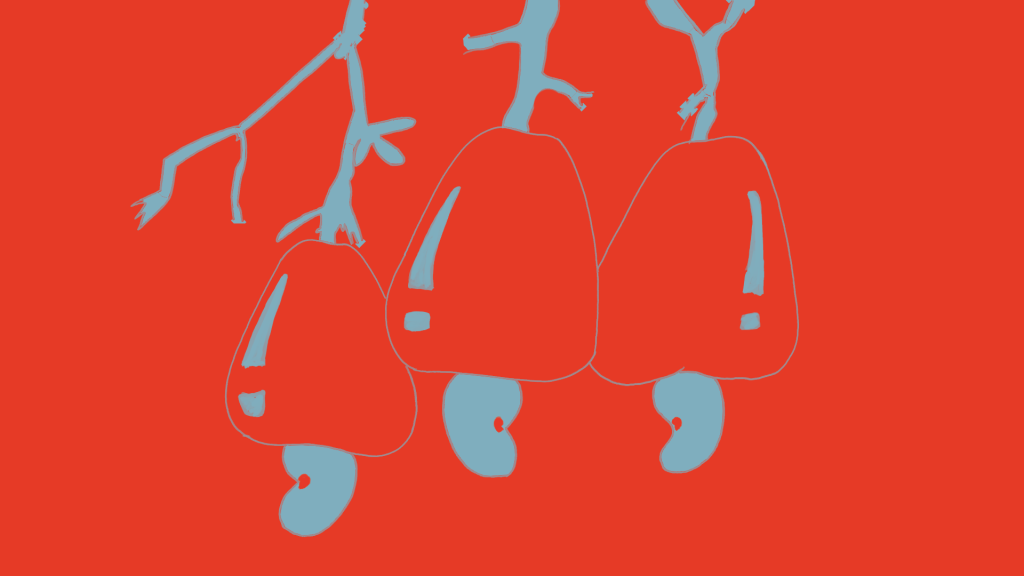
Mr Edi’s Commonwealth
Aby Ola
Background
The Second World War lasted from 1939 to 1945, drawing thousands of young men from Nigeria and West Africa into its ranks. Some, as young as sixteen, were conscripted; others found themselves enlisted after committing a misdemeanour or being unable to pay a fine.
Lagos, Nigeria.
This morning, just after Salat Fajr, the first prayer of the day, they took my bones out of the place they had lain for the last forty years. The white cloth I’d been shrouded in was still intact, although no longer white. I am now free from the unmediated darkness. I am among breathing bodies, beating hearts, and new smells. I can hear my grandchildren, great-grandchildren, and random people, planning what to do after this uncommon spectacle. I can see three bare-backed diggers, their T-shirts tied around their surgical face masks as the stench of rotting wood fills the air. They pulled out the two planks of decayed wood that once covered my body and tossed my remains on them as if I wasn’t once a person.
Ayaan, my eldest daughter, jumps forward, nearly tripping over her Ankara wrapper. “Oga, I beg o, softly now…” For a moment, I hover above the scent of sour earth, watching wood lice scatter into the red soil as if they’d been called to tell my secrets. Secrets now rising with the disturbed soil.
“Do you want my father to haunt you, or are we not paying for your service?” she says in between retying her wrapper and covering her face.
“Sorry o, but Madam, we know what we’re doing,” replies one of the diggers, his voice muffled beneath the blue surgical face mask.
What has happened to my country, to my children? Did I not do enough by them to warrant myself a peaceful resting place? Are they desperate for money, or do they just want rid of me?
The stench of decaying leaves and cashew fruit hangs low in the air. My cashew trees are in full bloom. Their yellow and orange fruits dot the ground like forgotten dreams. There is a faint sound of a woman crying, but no one seems concerned. My three girls sit on white plastic chairs, thumbing their prayer beads. Their faces are lined and their steps are slow. They murmur verses from the Quran and caress their tasbih like they’re repeating an unholy incantation. I can see my son, Santos, roaming amongst the small gathering of onlookers. He looks like he did on the day he passed. Tall with his head and shoulders bent forward. His fair skin, dry and ashy; he was never one for moisturiser. He moves with the nervous energy of a bee drunk on palm wine, peering into his sisters’ faces.
“Do you people not have places to go?” says Ayaan.
“People will always poke-nose,” replies Nofissatou, the youngest. She rearranges her scarf around her mouth and nose and continues thumbing her tasbih. Feet shuffle; people look at the slim rectangular blocks in their hands but make no attempt to leave. They all have what I think is a walkie-talkie device. Times have changed. Can they not hear the crying woman? The diggers are shouting and waving at the only man with a clean shirt and a clipboard. They’ve found something. Suddenly, one of the diggers shouts, holding up a dirt-caked ring on what must have once been a finger. The man in the clean shirt steps forward, his face alight like he’s discovered gold.
“How many graves are there?” he asks.
Ayaan, her voice flat, doesn’t look up. “My father, his father, and our brother. Three.”
“We have found another grave. This is now a crime scene,” the man announces.
Someone snorts. Someone else asks if the family will still serve food after the prayers.
“Are you for real? See me see trouble. Have you been watching Netflix?” says Nofissatou.
The man in charge taps his device and shouts into the static. Uncertainty creeps around the gathering. I see heads turn away from the graves, devices held aloft; everyone is waiting.
The woman’s cries get louder. I can see my father stumbling near the dry well. I must talk to him. The dead only talk to each other when they’re amongst the living.
“I told you there’d be others buried here,” says a man in the crowd to his friend. “I guess they will not be serving food”
I hover around the group of people listening to what they’re saying, looking at their devices. I move back to the graves and back to where my daughters sit. They look well. Their eyes are not rheumy and tinged with blue like their mother’s. The woman’s cries are drifting through the yard, getting louder with each minute. I don’t think the people can hear her. They have found another grave, but not the letters and emblems of a war I had no business being in.
I bought the land in October 1945. A month after I returned home to Lagos with dreams sewn into the waistband of my trousers. I promised myself I’d do two things if I ever made it out of Burma.
Build a house.
Start my own commonwealth.
“The empire needs you. Come sign up, come fight for the empire,” the army recruiters would shout as you boarded a Zarpas bus at Idi-Oro motor park, as if the oppressors were in our backyard. If you were unlucky enough to go to court, instead of paying a fine, you’d be enlisted by force. I never understood why we Nigerians had to fight a war with people who didn’t wrong us. I thought myself lucky when, at age 28, they first said I was too old to fight.
All that changed when my father introduced me to Ramota, the one-eyed daughter of his best friend. Ramota was a Saro girl. A descendant of slaves repatriated from Brazil. When we got married in 1943, food and basic stuff were four times the price they had been. The colonial government issued ration cards, and people had to queue for hours to buy common Garri.
My Father and I would set traps to catch wild guinea fowl and antelopes in Oke-Arin forest. We made good money, and the price of bushmeat was not regulated like palm oil and other foodstuffs. And then I severed three fingers of my left hand while tending a trap. “At least you can’t be forced to fight now,” said my father as he freed the rest of my hand and the exhausted pangolin.
Ramota and I had twins within the first year of marriage, a boy and a girl. Taiwo, our tiny daughter, came out first. My reluctant son, Kehinde, was born three hours later as Ramota lay spent and anaemic on a mat in our room. Seven days later, Taiwo stopped breathing. It was the afternoon of their naming ceremony. As soon as the guests left, Ramota put her tiny body in an old tobacco tin and pushed it under the bed. She put lemon grass and wild basil in the box and screamed at anyone who tried to take it from her. At night, she’d rock the box as if our baby girl were asleep. One night as she bathed our son, I took the box to my father. My father buried Taiwo in the forest as Ramota’s cries echoed through the darkness. I wiped her face with a wet handkerchief and wondered how tears could fall from her eyeless socket. Today, people would say that the incident traumatised her.
Harmattan season, 1944. The war raged in places far away from home. Food got more expensive, and more young people were forced to sign up to fight. The red sand from the north coated everything like a second skin, and people’s lips and skin would crack like fragile Chinese porcelain. Even the dew on the grass was red. Maybe it was hunger, the dry air or grief, but Ramota lost her senses that week. She called me a murderer. She told anyone who’d listen that I sacrificed her baby because she was a girl. She said I was so useless that even the army didn’t want me. She spat in my face and threw a clay pot at my head. My fists took on a life of their own, fuelled by hunger and anger. I didn’t stop hitting her until she lay on the ground covered in dirt. Blood pooled around her head, turning the red earth burgundy. I stopped when my father threw a bucket of water over me just as the police arrived.
They put me in a cell at Mushin police station with five other men caught wandering after the wartime curfew. We stayed there for two nights. In exchange for food, we swept the police compound and picked up litter, chained to each other like slaves. On the third night, I found myself at Apapa seaport along with other misfits, ex-prisoners and recruits. Instead of prison, they drafted me into the 82nd West African army division. They said we had to defend the King and the Commonwealth. I couldn’t look back. I thought we’d see parts of the world I only saw in the newspaper, but little did I know that the things I saw would visit me in my quiet moments. They don’t tell you that about war.
We went by sea to India. A place called Pune, where people spoke many different languages, women wore rings in their noses, and some men wore long scarves on their heads. The captain of my unit named me Edi. His English tongue could not pronounce Ahmed. In Pune, they taught us how to fire artillery, how to fight, hand-to-hand combat—jungle training, they called it. The elephant grass in the bush went past my waist, and the sun beat down on our heads and punished us for being in someone else’s war. After our first month of training, we were sent to Burma and plunged into combat.
In Burma, they gave us weekly injections for malaria. If the bullets didn’t kill you, then dysentery or typhoid would ravage you. We cut grass, felled trees, played cards and carried guns. Not the type that my father used to take hunting for wild boar in the forests of Ibadan; they were big ones that we fed necklaces of bullets. The noise they made worked its way into our bellies, along with the sickly smell of bodies buried in haste. And we’d hear the repeating sounds in the dark of night when we slept with one eye open, cradling our weapons like our beloved. I would talk to people one day, and the next day, I’d see them floating down the Irrawaddy River. When the food ran out, we’d eat grasshoppers, crickets and bush rats until a parachute dropped a parcel of food and ammunition, then we’d have Spam and dried potato flakes. I would have given anything for some of Ramota’s slow-cooked beans and hot pepper sauce.
When the war was over, they gave us medals and money with promises of more. Pension, they called it. I was nearly 31 with a mangled right hand, a knack for picking up languages spoken far away from home and good at card games. They put us on a ship back home, and within six weeks, we landed at Apapa port and received a hero’s welcome. I came back broken. I’d seen things that no one needed to see in a lifetime. Nobody knew where my wife was.
I met and married Zafiya and had three more children. Zafiya was an older woman who’d lost her husband in the war. She wore plum red lipstick and dyed her hair with henna and the indigo leaves she plucked from the backyard. She said we should rename Kehinde so people wouldn’t ask about his twin, so we called him Santos. I built this house with the money I’d won in a card game with a lieutenant of our division, a sum of four hundred pounds, which was a lot of money back then. I planted cashew, lime, and orange trees. Their vibrant colours and fragrant blossoms added beauty to our surroundings. There was no time to think about what went before. This was my commonwealth.
My medals were kept in a box under my bed, along with items I had collected and the letters I had been asked to deliver. Letters that were dictated to me in the early hours of the morning, when the mosquitoes would ‘sleep’ their insides full of their last feed. When the camp was quiet and the men posted on lookout were nodding off with one eye open and slack grips on their rifles. The addresses on some of the letters faded with time. With the letters were playing cards; my lucky card with a slight dent on the edge. There were also cuttings I promised to plant one day, and an empty sandalwood perfume bottle that an Indian woman gave me to remember her by. There is probably an Edi junior somewhere in Pune, who grew up wondering why he looked different to everyone else. A part of my commonwealth, a seed that should not have been sown.
I went to Accra on the Gold Coast. To Yaoundé in the Cameroons, where they spoke French on one side of the street and English on the other. After five such visits, I no longer wanted to be the bearer of bad news. People wanted to know if their loved one suffered.
“Did he die quickly?” they asked.
“Did someone pray over him?”
“Our son was Muslim. Did they wash his body before burial?”
“Yes,” I answered, just as I would have wanted someone to do for me if the roles were reversed. I delivered those that I could and asked for forgiveness for those I couldn’t deliver.
I’d been gone a long time. Too much sugar in the blood, the doctor said, eat less, move more. He’d probably never been hungry in his life. Never had to carry rucksacks that were four times his body weight when the sun was at its highest, bullets zig-zagging through the air while a Japanese soldier was hiding in the tree above your head. At a certain age, you earn the right not to move as much as before. I went to sleep one night and didn’t wake up. They buried me near the cashew trees in my yard, where the bats picked the fruit and dropped the stalks.
My father’s ghost floats away as soon as I get near him. For someone so old, he moves pretty fast. The man in charge has ordered the diggers to line up all the remains in four separate coffins. In his breast pocket is a brown envelope with crisp Naira notes. I could steal it, but that will only delay them putting me in my second final resting place. My fragile mind is exhausted and ready for rest. The crying woman must be Ramota, but I cannot see her.
The house will be demolished; the land is prime real estate now, and I hear my children argue about who gets what. They finally have their commonwealth, generational wealth, as I heard one of the onlookers say. A pity the boy didn’t stay long enough to get his share.
They found my box beneath the wood that lined my grave. I can hear the grandchildren debating whether my bones are still held together by cartilage and why they never knew that I was in the army. Do I care what my children and grandchildren think about the medals won in someone else’s war? Some of the letters disintegrate as soon as they touch them
“Stick the pieces together,” says one.
“It’s probably love letters from an old flame. There’s a map. Maybe there is buried treasure?”
“Who was Taiwo? Did we have twins in the family?” asks one of the girls as she puts the yellowed paper pieces together.
“Maybe the medals should go to a museum,” says one of the older ones. This must be Santos’s son. His dreadlocked hair is flecked with grey, and he walks with a slight stoop just like his father.
“My father used to say he had a twin. I never believed him. Why was he called Santos?”
Santos whispers in my ear.
“Aren’t you afraid that my sister will be left here?”
“I don’t know where he put her.”
He floats off, his bony shoulders shaking. Is he laughing or crying?
The bats have gone, but the cashew trees shed their fruit in the gentle breeze. I can still hear Ramota’s cries as they load us into the back of a rusty station wagon. The cattle egrets on their way back from the abattoir partly mask her cries. I didn’t find Taiwo’s resting place.
Aby Ola is an IT product manager who loves reading and writing short stories, especially anything with a historical context that leaves her scratching her head and thinking, did this really happen?
Cover credit: Ebumnobichukwu Agu.
 lọ́unlọ́un