Fragments of a Protest
Azeez Adekunle
Background
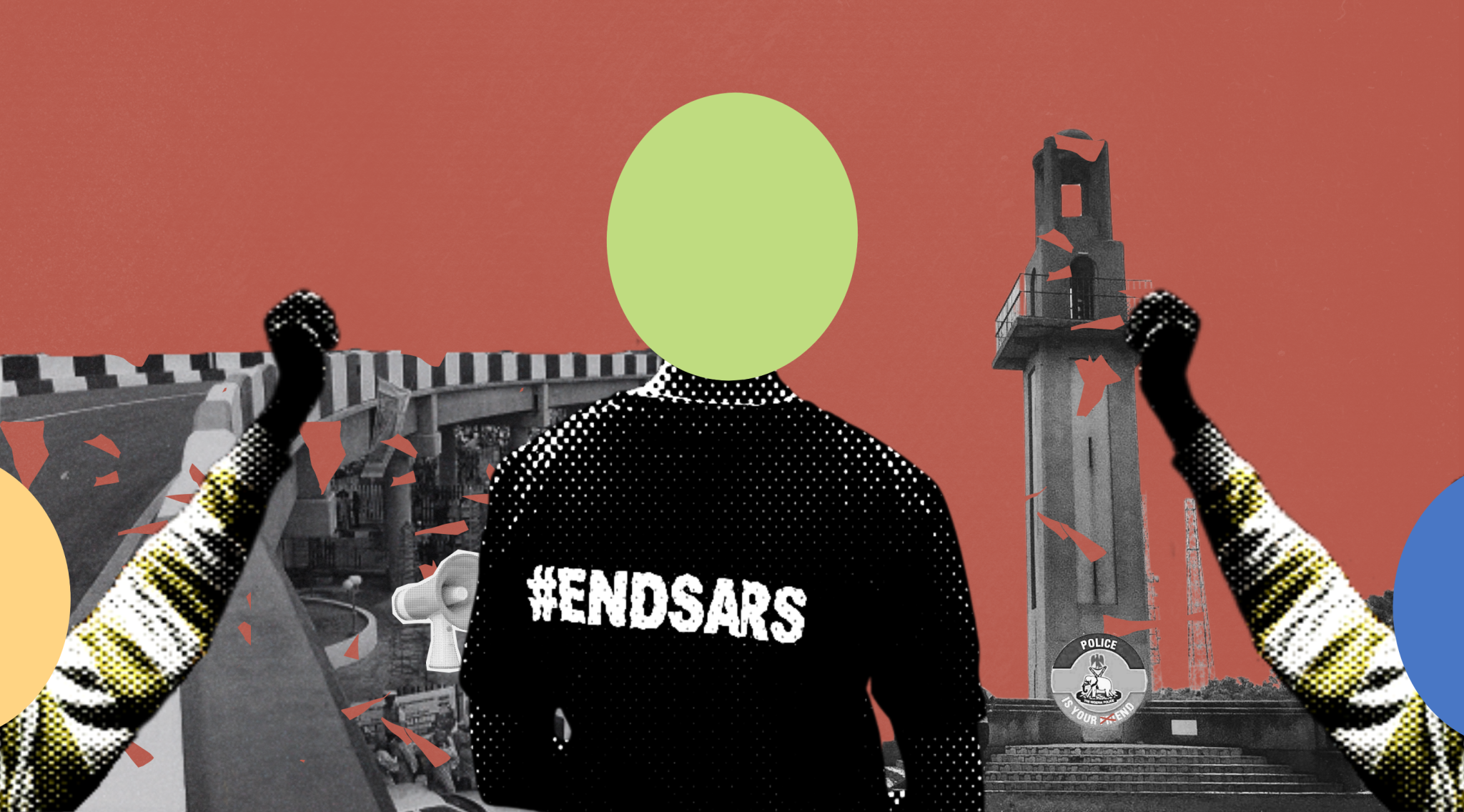
In October 2020, young Nigerians took to the streets in a nationwide protest against the Special Anti-Robbery Squad (SARS), calling for its disbandment amid reports of widespread abuse and brutality.
What once felt inseparable from my memory has, in the years since, begun to fade. The more I look inward to remember the details—the scene, atmosphere—the clearer it becomes that time has a way of blurring even the events and things we thought we would never forget. The events of the 2020 End SARS protests shouldn’t be one that I would find difficult to remember, especially its rough edges, but what is life if not the slow fading of memory?
Before my encounter with the protest that would soon have a significance on the lives of Nigerian youths, I had often heard of stories of protests, the civil war, and of ethnic rivalries that spiralled into chaos. These stories came either from elders or were encountered in historical accounts. However, this event would take what once existed as fiction to me and turn it into reality.
I was a student living in Ibadan when the End SARS protests occurred. I was into graphics design, learning the intricacies of, and techniques employed in making compelling visuals. On a not-so-vivid date, afternoon precisely, a few days into the protests, my colleagues and I in the graphics shop heard of the killing of a primary school boy by a police officer at Ojoo. The boy, returning from school after closing, was hit by a stray bullet during a confrontation between the police and protesters. He died instantly. Within a moment of hearing this news, everything stood still. Seconds stretched into minutes; grief and fear held me. Grief for a boy I never knew, and fear for my family members who had businesses in this area.
Instinctively, I borrowed a phone from a colleague to make a call to my mother, who had her shop close to the police station on the street where the boy was killed. For some minutes, she didn’t pick up, and this complicated the troubled emotions inside me. I kept having the wildest imaginations, and a lot of questions kept popping up in my head: Where could she be? Hope she hadn’t fallen victim to the chaos following the boy’s death? Where could she have left her phone? I kept having these thoughts. After about three attempts at calling her, she picked up. Relief washed over me. The several questions disappeared, and all I could ask was why she didn’t pick up early.
She said she wasn’t in the shop when the trouble started. She had been on her way there before she heard gunshots and ‘had to run for her dear life.’ She assured me she was safe. I didn’t inquire further; knowing she was safe returned my peace of mind. I dropped the call and returned the phone. Everyone in the shop was a bit apprehensive. One of my colleagues expressed pity for the boy’s parents, while another prayed that the incident would not escalate. We were wary of what the situation could cause. Already, the nation’s stability was fragile, even with the protests that had so far been considered peaceful. But now everything could, it seemed, go the other way from this incident.
Shortly after, our boss parked in front of the shop. She entered and asked if we had heard the latest news. We answered in affirmation. She was distraught, feeling sympathy for the bereaved family. We resolved into discussion for the rest of the day as customers had reduced in their numbers. Those who had promised to come back for their designs couldn’t do so again. And those who were in the shop before the news hurried home for safety.
Before the unfortunate incident, we had planned to design some t-shirts to show our solidarity for the #EndSARS movement. The inscriptions would read ‘Soro Soke,’ which meant ‘Speak up.’ My creative vision for the design was a microphone with the words booming out of it. A colleague wanted to use the iconic photograph of activist Aishat Yesufu from the protest. Many of us explored different ways to bring these two ideas to life. When we finished, I copied them onto a flash drive to take to Mokola, where the final printing was to take place.
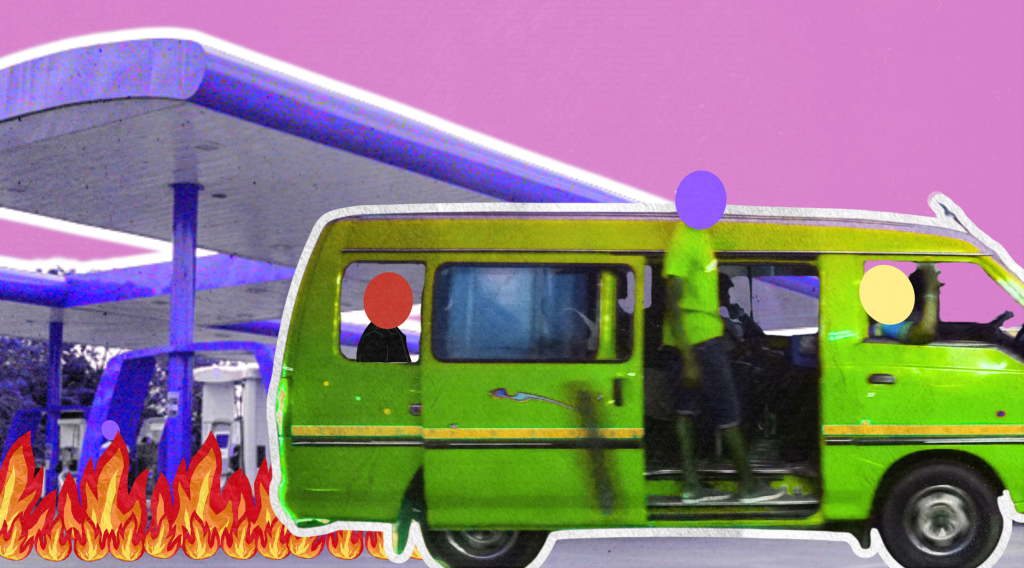
On my way there, I noticed some shops and stall owners closing up. There were only a few people on the road I was walking on. Transport fare had skyrocketed. Yet, this did not dissuade people from boarding cars to take them home. The atmosphere was tense. Some people were still in their shops selling goods, and others went about their normal trade; after all, the chaos was slightly far off from where they were. In this moment, I became conscious of the varying degrees of decisions or options available to humans. While some people were running for their lives, others chose to sit still and go about their normal business like nothing had happened or was happening.
Then it dawned on me that I myself hadn’t thought of how I would get home safely after my Mokola trip. I realised I wasn’t exempt from the situation unfolding in front of my eyes. Maybe I had not considered it because I knew I would have to pass through Ojoo to my destination, and I could have waited till nighttime, when the chaos would have subsided, to catch a bus home. Or maybe it was because there was another road, along Ajibode, that I could have taken to avoid encountering any problems. All these options were available to me, and they explain why I remained calm even though the atmosphere around me suggested I be otherwise.
I got into a cab going to Mokola. There was silence until someone broke it with commentary on the present situation in the country. Other passengers followed suit with their takes, and the conversation broadened. I listened attentively to their opinions, and all were critical of the excesses of the SARS—Special Anti-Robbery Squad—in the country. On a number of occasions, I myself had been waylaid by some SARS officials and, on no grounds of a criminal offence, been told I had to follow them to their station. My ‘offence’ was ‘looking like a yahoo boy’—an internet fraudster—because of the way I was supposedly dressed. There were a number of other horrendous things youths were subjected to, making my co-passengers’ opinions valid. Even if you were trying to do your job and curb the ills of society, it must be done in a sane and orderly manner, someone said, and he couldn’t have been more right.
These early moments are those I can still recall faintly. Dropped the design at the printer, but what the atmosphere felt like, I can not remember anymore. Was it peaceful? Did the situation happening in Ojoo have an effect on people here in Mokola? These memories, I dare say, have escaped my mind. What is more baffling for me is how I have lost track of the sequence of events. There was a protest at the Bodija Market Junction. When this happened, I can not precisely say. Was it the day I came back from Mokola, or was it the following days of the protest? These are memories I would have loved to restore for posterity. Whether the Bodija protesters were made up of youths only, with no older people in attendance, is hard to say. What I can remember, however in fragments, was people moving along the road, some on foot, others in cars, a few perched on car boots holding placards. Most of what was written on them has faded from memory, but phrases like “Enough is Enough,” “Soro Soke,” and “End SARS Brutality” have remained with me. I remember, too, walking behind a group of protesters. On the part of the road they did not occupy, there were burnt tyres, thick smoke rising into the air. Whether the protest was on the verge of being hijacked, I can not clearly say. But I can still hear a voice insisting that it should remain peaceful, pushing back against fears of disruption.
My trip home after returning from Mokola is now hazy in my memory. Whether I later passed through Ojoo or followed another route has become difficult to determine. What I remember was the debate by passengers in the car I boarded on which road to take between the available two. Did I see the burnt police station, the scattered marketplace, and the goods pillaged? The mood in this vicinity—whether weary, tense, or gloomy—I can not recollect. Or maybe we later passed the second road, which might be the reason the images remain difficult to conjure in my mind.
While these are the fragments I can recall of the End SARS protest, what makes the blurring so personal for me is this: I no longer clearly remember the burning of the police station by protesters or when the clashes that led to the burning occurred. What bridges this now is a gap—an absence where something once real was. Today, the station stands reconstructed, wearing a new look, which could make a visitor doubt if a protest or burning ever happened.
And for the dates of the clashes, their disappearance might have been shaped by how prominent the Lekki toll-gate incident, in Lagos, became, taking the spotlight from similar events of the protests in other parts of the country. Even when the End SARS remembrance is observed every year, the protests in Lagos receive the most attention, standing at the forefront of national discourse—however, rightfully so.
Azeez Adekunle is a Nigerian writer interested in music, culture, and the intersections of memory and social experience.
Cover credit: Victor Ola-Matthew.