What the Ugba Tree Remembers
Bill Nwonwu
Background
On July 6, 1967, the Nigerian-Biafran Civil War began when the Nigerian government launched a military offensive against the secessionist state of Biafra, leading to the loss of many lives.
There is an ugba tree at the edge of my grandmother’s compound in Oguta, Imo State, that has never been cut. My grandmother, Mama Chidinma, said it was older than the war. She said it stood through everything: through the sound of federal jets overhead, through the weeks when there was no salt, and through the morning they buried her brother under moonlight because the daytime was too dangerous for the living. She said the tree had seen things she could not speak of. And so, as a child, I would press my palm against its bark and try to listen.
I am the grandchild of Biafra. I did not live through the war; I was born decades after January 1970, when Lieutenant Colonel Ojukwu fled the country and the Republic of Biafra formally surrendered. But the war did not end for our family when the guns went silent. It ended, if ever, in fragments.
What My Grandmother Carried
Mama Chidinma was seventeen when the war began. She had been living in Enugu, where her father, my great-grandfather, Ichie Nwofor, worked as a primary school headmaster. In May 1967, when Ojukwu declared the Republic of Biafra, there was, she told me, a kind of wild joy in the streets; the relief of a people who had finally named their wounds.
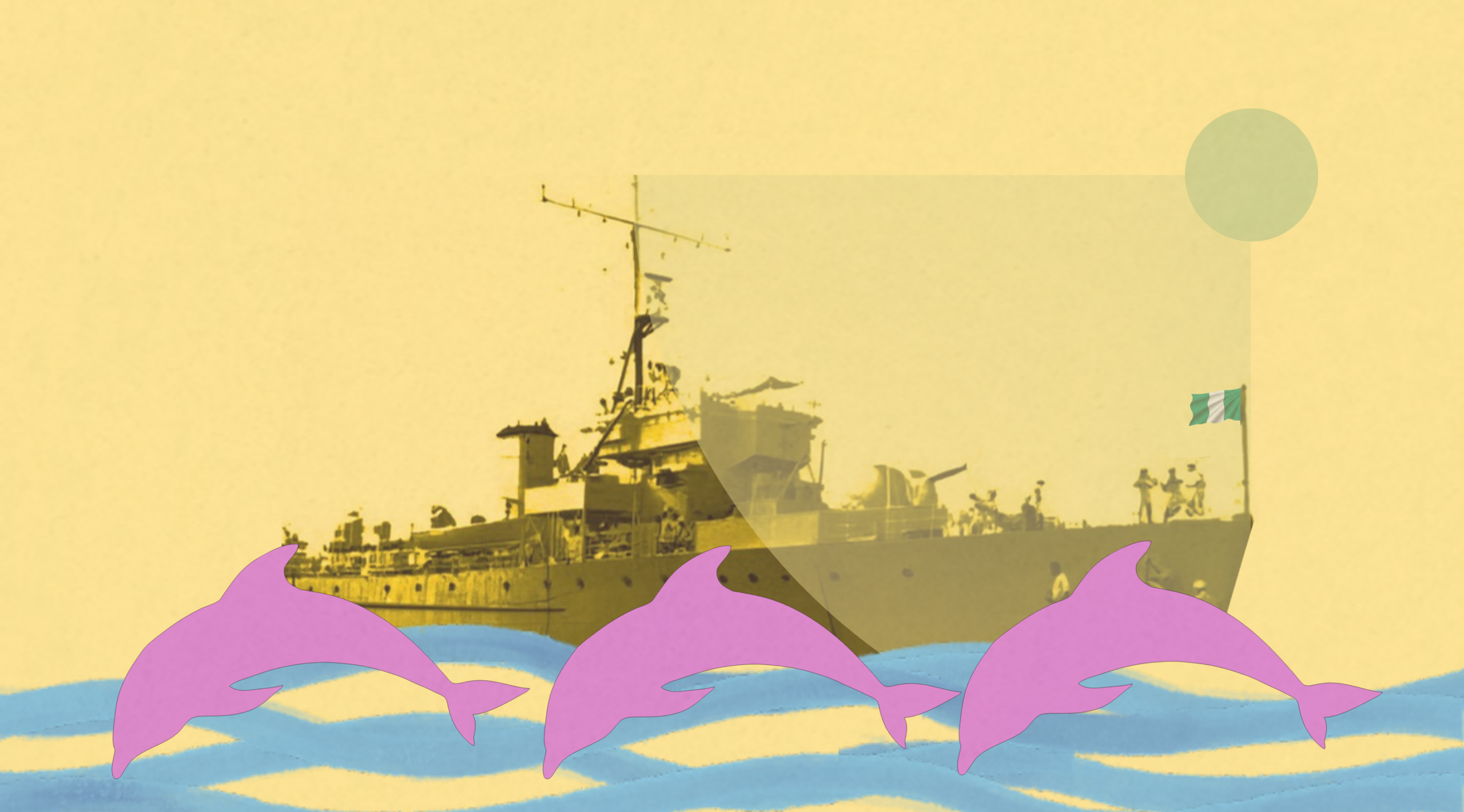
The federal military government’s response to the secession was swift: General Yakubu Gowon ordered what he called a ‘police action’—a phrase that, my grandmother said, was the first lie of the war. By July 1967, federal troops invaded the Biafran territory in what became a full-scale military campaign. Within months, the federal government imposed a naval and land blockade that cut off Biafra from food imports. This was not incidental; the blockade was a deliberate strategy—starvation as a weapon of war.
My grandmother’s family fled Enugu when the city fell in October 1967. They walked. She was responsible for her younger sister, Ada, who was eleven, and her baby brother, Obiora, whom she carried on her back. Ichie Nwofor led them south, towards Oguta, following other families along roads thick with people who had lost the same things. She told me they ate ugwu leaves. She told me Ada’s legs swelled. She told me that when Obiora was very still on her back, she would hum, and when he moved his fingers against her neck, she knew to keep going.
Obiora did not survive the war. He died in 1969 of kwashiorkor, the protein-deficiency disease that became the face of the Biafran famine. His face is in one of the photographs. Eyes too large, belly swollen, the skin of a child who has eaten nothing for too long. My grandmother kept no photograph of him. She kept only his name, which she said aloud every year on the anniversary of his death, alone in her room, when she thought no one could hear.
I want to be precise here, because precision is a form of love: Obiora Nwofor died on a Wednesday. He was two years old. He weighed, my grandmother estimated, as much as a handful of cassava. She buried him with her father’s help in the compound of a stranger who had taken them in. She did not cry at the burial. She had not learned yet what she had lost. That understanding would come later, in waves, for the rest of her life.
Twenty Pounds
My grandfather, Papa Emeka, was twenty-three when the war ended. He had fought with the Biafran army, although he never fully disclosed in what capacity. He spoke instead about the engineers, the improvised armouries, the students who became soldiers in a single afternoon.
When Biafra fell in January 1970, the federal government announced a policy of reconciliation, reconstruction, and reintegration; the ‘3Rs’, as it became known. General Gowon declared that there was ‘No Victor, No Vanquished.’ My grandfather said this was the second lie of the war.
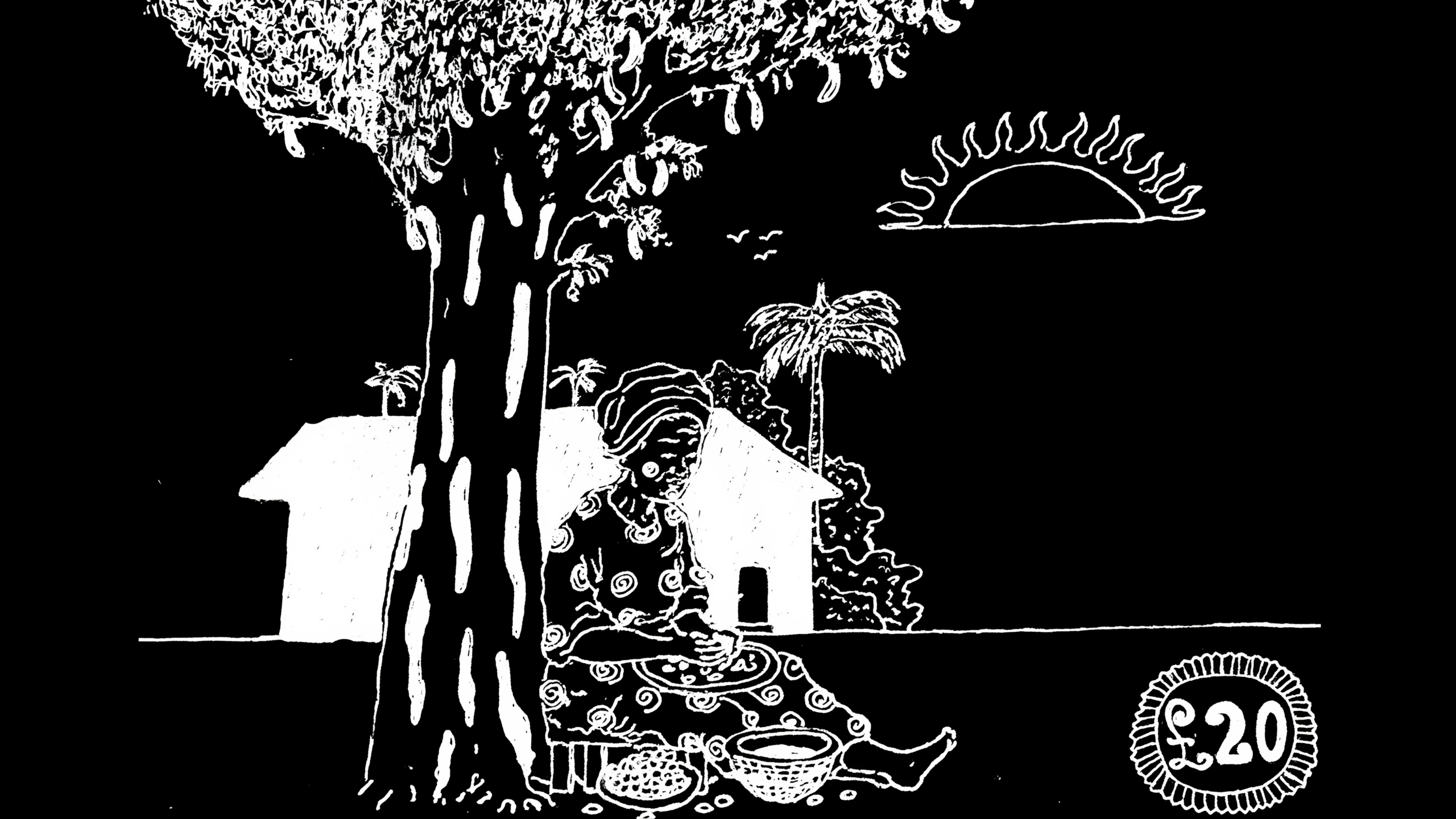
The evidence was the money. Every Igbo person who had held Biafran pounds was permitted to exchange them for Nigerian currency, but regardless of how much Biafran currency they held, the government set the exchange rate at a flat 20 Nigerian pounds per person. A trader who had saved 3,000 Biafran pounds received 20 pounds. A farmer who had buried his life’s earnings in a clay pot received twenty pounds. A schoolteacher, a market woman, a carpenter—twenty pounds each.
My grandfather received twenty pounds. He had been, before the war, a tradesman who dealt in dry goods between Onitsha and Port Harcourt. He had savings. He had a bicycle. He had plans. After the exchange, he had twenty pounds, no bicycle—it had been commandeered during the war—and a scar on his left arm from a piece of shrapnel he had dug out himself with a kitchen knife because there was no doctor available.
This dispossession was not individual. It was collective and it was thorough. The economic devastation of Igboland after 1970 set the community back by at least a generation. Properties that Igbo people had owned in the North and in Lagos had been seized; federal appointments rarely reached them; oil revenues flowed through Port Harcourt to Abuja and back, largely without benefit to the Igbo communities from whose land the oil came.
My grandfather rebuilt anyway. This is what I mean when I say I am the grandchild of Biafra; not just of the war, but also of the rebuilding. He began again with twenty shillings and what he knew. He bought kerosene in small quantities and resold it at a margin. He saved. He bought a parcel of land. He built a single room, then added a second. He married my grandmother, who was, he told me, ‘the bravest person I had ever met, and I had met soldiers’, and they had seven children, and they sent every one of them to university.
The Language of What Is Not Said
Growing up in my grandparents’ compound, I learned a third language alongside Igbo and English: the language of the unsaid. It was spoken when my grandmother left the room when the television news turned to military matters, or when no one in the family said the word ‘Biafra’ at the dinner table: the word still had weight, and still carried the full mass of everything it meant.
I was twelve when I first heard the full story. My grandmother was sick. Not gravely, but enough to be confined to bed, which meant she had time, and I had proximity. I sat at the foot of her bed for three afternoons in a row. She told me about Enugu. About walking. About Obiora. About the tree in the compound, which she had planted herself from a seedling her father had given her before the bombing began, the last ordinary thing she remembered receiving as a child.
She told me that for years after the war, she could not see a thin child without her heart seizing. She told me she had nightmares in which she was still on the road, still carrying Obiora, and she would wake and reach across to her husband’s side of the bed to assure herself that the walking was over. She told me that she had prayed, truly prayed, only twice in her life: once when Ada’s leg swelling finally went down and once when her first child was born whole and fat and screaming, and she said the screaming was the most beautiful sound she had ever heard, because it meant the child had enough air in its lungs, enough flesh on its bones.
What the Tree Knows
The ugba tree in my grandmother’s compound is still standing. I know this because I was there last harmattan season, and I pressed my palm against it the way I did as a child. It is broader now. Its roots have pushed up through the earth around its base in great knuckled ridges so that, walking near it, you have to watch your step. My grandmother is eighty-one. She moves slowly, but she moves, and on the morning I arrived, she was already in the compound when I woke, sitting in her low chair in the shade of that tree, shelling melon seeds.
We did not talk about the war that morning. We shelled melon seeds together, and she told me about the neighbour’s goat, which had gotten into her garden again, and about the price of palm oil in the market, which she found outrageous. She laughed at something I said, and the laugh was so complete, so effortless, that for a moment I could only look at her.
This woman walked from Enugu. This woman buried Obiora under moonlight. This woman received 20 pounds for her husband’s savings, planted an ugba tree, raised seven children and sat here in the shade of the tree she planted and laughed at her grandchild.
I do not know how to explain what it means to be descended from people like this. There is no adequate word for it in English, and even in Igbo, the vocabulary of survival can sound like an abstraction until it sits across from you in a low chair, shelling melon seeds. The history books will tell you about the Nigeria-Biafra War in geopolitical terms—the Cold War interests of Britain and the Soviet Union, the oil, and the ethnic arithmetic of a postcolonial state that was never designed to be governed peaceably. All of that is true, and all of it matters. But what the history books will not tell you is the precise feeling of Obiora’s fingers against your neck on a road south of Enugu and what it means to carry that feeling for sixty years and still get up in the morning and shell melon seeds and laugh.
The Ugba Tree Will Remain
My grandmother is eighty-one. She has not, in six decades, received an acknowledgement from Nigeria for what her family lost in the war. Not a formal apology. Not a recognition. Not even a museum exhibit in Oguta that says, ‘Here, in this community, people suffered this, and we remember them.’ She has not asked for these things either. She is, as I said, a woman of great practicality. But I am her grandchild, and I am asking. Not for her sake alone, but for Obiora’s. For all the Obioras who did not live to ask for themselves.
When my grandmother is gone—and I pray God gives her many more harmattan seasons—the ugba tree will remain. It will go on growing in the compound as it has for more than sixty years, its roots deeper in the earth than anyone can see and its shadow wide enough that three people can sit beneath it comfortably. My children, if I have them, will sit under it. I will tell them, ‘Your great-grandmother planted this tree.’ She carried her brother on her back, and he died, and she planted this tree, and it is still here.
Bill Nwonwu is a passionate young writer, student, and creative thinker from Nigeria. Bill has worked on essays exploring social issues, African democracy, Christian theology, poverty, and early Christian history.
Cover credit: Ifeoluwasé Taiwo