
Of Freedom and A Fall
Mary Inibhojie Okaka
Background
In February 1897, British troops invaded Benin City, looted its royal treasures, and dismantled the kingdom in one of Africa’s greatest art thefts.
A Sweltering Afternoon In 1897.
A YOUNG, DARK-SKINNED girl with an afro stands amidst a crowd, studying the pink, straight-lined lips of the white man before them as he shouts and gesticulates. She watches how they tremble despite their sharp thinness and how they upset the long, brown moustache above them. Her eyes rove around his face, curious at how different it is from the faces of the men she grew up with, and yet, so similar.
She finds a stray bead of sweat that seems to form from beneath his big, cuboid khaki hat. She follows the sweat as it courses into his open mouth, and winces as she imagines it mixing with the spittle forming just inside his mouth. The image irritates her, and so her eyes wander elsewhere.
The atmosphere is acrid; there is still smoke in the air from the recent burning. The crowd is huddled in front of what used to be the palace of the great Benin Kingdom. Nobody is really listening to the white man. They are thinking of the abomination. They are trying to turn their face from the sad sight of their Oba, the great Ovoranmwen Nogbaisi, the Rising Sun of the Benin Kingdom, head bowed, displayed like a common piece of war booty.
They are hunching their shoulders and sighing at the ruins of the palace and the destruction of decades of hard work by their ancestors. They are thinking of how much sacrifice would be needed to make this calamity right.
Nothing else is interesting enough to distract her in this motley crowd, except the thought that for the first time since the beginning of the great Benin Kingdom, free men and slaves are standing together as equals.
She turns her gaze to a tall man, one of their own, in very short khaki that only came in white men’s sizes, interpreting the words of the British man next to him in Bini. She wonders if he is aware of the whispers in the crowd accusing him of being an offspring of slaves, their only feasible reason being that he is helping the white man. She wonders if he realises that his role is insignificant, that these people had been trading with the white man for so long without understanding the language the white man speaks. The interpreter is now explaining what the Oba had done wrong, and she decides to listen, if not for anything else, to know what the white man’s point of view was.
Before the invasion, the common talk was that the white man was a disrespectful, dangerous, sly entity, saying one thing and doing the other. They had dared to try to come into the kingdom during its sacred festival, even after the Oba had sent palace messengers to warn them. How dare they?
So the people saw the mass killing of the white man’s entourage in Egwato as well-deserved retribution for their audacity; the gods of the great Benin Kingdom were not to be toyed with. But, they could be burned with fire, apparently. The young girl almost laughs out loud at the ridiculousness of it all.
Now, according to the interpreter, the white man’s reason is the same as the Oba’s. They find the Oba to be disrespectful, sly, dangerous and guilty of war crimes. They argue that human sacrifice and slavery are crimes against humanity, and they do not just set out to avenge their fallen comrades and teach an errant king a lesson; they have come with something they call freedom.
That, she is interested in: the tool the white man used to draw them all, free men and slaves, out of hiding after they’d burned down the city.
The announcement had passed around in murmurs in their little farm hideouts that any enslaved man who would come out of hiding before their master was automatically declared free. The promise of freedom was too sweet an offer to pass off, and the masters did not want to be outdone by their slaves, so everyone came out in droves. The young girl had been hesitant at first, so many questions burning within her. Who would she leave Oduwa with? He was stronger and could hobble about, but he still wasn’t fully healed. She questioned what the promise of freedom meant for those who, like her, were under the employ of the Oba himself, and if life as a free woman would be anything like the life she lived before she was brought here. What even was freedom?
A cold hand touches hers, and she turns to see Efua, her friend and fellow slave. They had both worked for Queen Eghe before their entire lives turned to smoke.
“Oduwa?”
“He is with Iye Osayuki. He was awake before I started coming. He asked about you.”
“His condition?”
“Better. Iye Osayuki’s children were making yams. I made him promise to eat a lot.”
“Where did they see yam?”
“One of the many merits of being a kitchen slave. Iye Osayuki still had a spare key to one of the Oba’s barns. In the midst of the whole confusion, do you believe this woman had the sense to give her sons the key to raid the barn and hide the yams?”
They share a laugh, and she notices that even the laughter now is lighter and freer.
“How did you find me?”
“Should that be a question? Who wouldn’t find you with this hair?”
Her smile is tight. She tries to focus again on the interpreter, and this time, she notices that he has a complexion like Oduwa, like the fine bronze he sculpts. She shudders as images of him come to mind, dragging alongside them a memory she doesn’t like to recollect.
THE MEMORY STARTS with a loud, piercing hiss that makes one stand still in acceptance: the haunting sound that heralded the arrival of tube-like objects that started fires wherever they fell.
Then the white men, guns in hand, closely following the path cleared by the fire, emerge from the cloud of smoke like an army of death.
She doesn’t remember how she felt in that instance or what she had thought of first. She was with the Oba’s Harem when the invasion started, and she remembers the panic in the screams strewn about and the urgency in the fear-stricken eyes of mothers as they gathered their children and whatever else they could. She remembers the fear. The first time she had encountered it was in her hometown, where she had been a princess. It was the same fear that had assailed her mom and the other co-queens in their living quarters. Back then, they didn’t get out in time. They were unprepared. So they were all swept up in the mayhem.
This time, they all got out in time, or, at least, most of them; they were a little prepared. They had known that war was coming, having seen the refugees from Agbor running towards Esan to find succour, and hearing first-hand accounts of the weapons of destruction the white man was carrying.
In the heat of all the chaos that ensued, she got separated from the Queen’s entourage, her legs leading her almost mindlessly to Oduwa’s workshop on the south side of the palace.
She had found him, her Oduwa, surrounded by dead people — his fellow artisans — and clutching his severely injured head. He held a small, bloody bronze figurine to his chest as blood pooled around him. He was still breathing, but the morbid sight of him was reminiscent of that of her father rolling on the ground in the throne room, his head macheted by Benin soldiers on the orders of the Oba.
She doesn’t remember how long she had knelt by his side, the smell of gunpowder still in the air, filling up her throat, barely aware of the British soldiers with guns slung across their torsos, going back and forth, feeding a pile of bronze artworks that sat forlorn a little distance from the dead bodies of their makers.
She just remembers carrying him and running. Who knows where she got the strength from? It probably came from the fear of loss; of losing the only person she had left.
They ran for so long, she and Oduwa. She had carried him around at first, too scared to leave him behind, counting it as a miracle that he stayed alive in those first days, hiding from place to place with friends and family who managed to survive too, barely eating or sleeping for days.
“IZOGIE. IZOGIE.”
She breaks out of her reverie and finds that the crowd has broken off into smaller clumps of murmurs. She turns to see her friend smiling.
“What?” she asked.
“Didn’t you hear?”
“Hear what?”
“Of course, you didn’t. Your head was probably off somewhere far again. Well, the interpreter said that the white man said that from henceforth, all slaves to the royal family are no longer bound. We are free.”
Efua does a little giggle and a little dance and starts laughing. Her friend tries to catch the happiness, but she can’t.
“This freedom, what does it mean?”
Efua stops to look at her, somewhat bewildered.
“What are you asking?”
“I mean, these white men. Their laws are not bound by ours, and ours are not bound by theirs. So, what does their freedom mean? Are we really free?”
Efua thinks of this for a moment, her brow deeply furrowed. She almost looks like a bronze cast in glossy caramel.
“I don’t know, Izogie. I have been a slave since birth. But I think it will be the same as what happened in your village. The Oba has been captured and is to be shipped away, alongside his wives, to who-knows-where. These white men are our leaders now, Izogie. They are our Oba now. They say that we are free, so we are free.”
She smiles back at her friend. “If we are free, then you must stop calling me Izogie. Izogie was a war slave. The name I was born with in my land is Asa.”
BACK AT THE HIDING CAMPS, there is a muted sense of happiness and celebration. After the white man’s speech, the men went back to their lands and their homes to salvage whatever was left and find enough to start all over, and also try to make sense of what this new era would mean for them and their coming generations, while the slaves went back to the hiding camps. It is now clear that there is no going back to what they used to be or do. So they decide to celebrate their freedom first, but not too loudly, so as not to anger their former masters. Afterwards, they, too, will try to make sense of this whole thing.
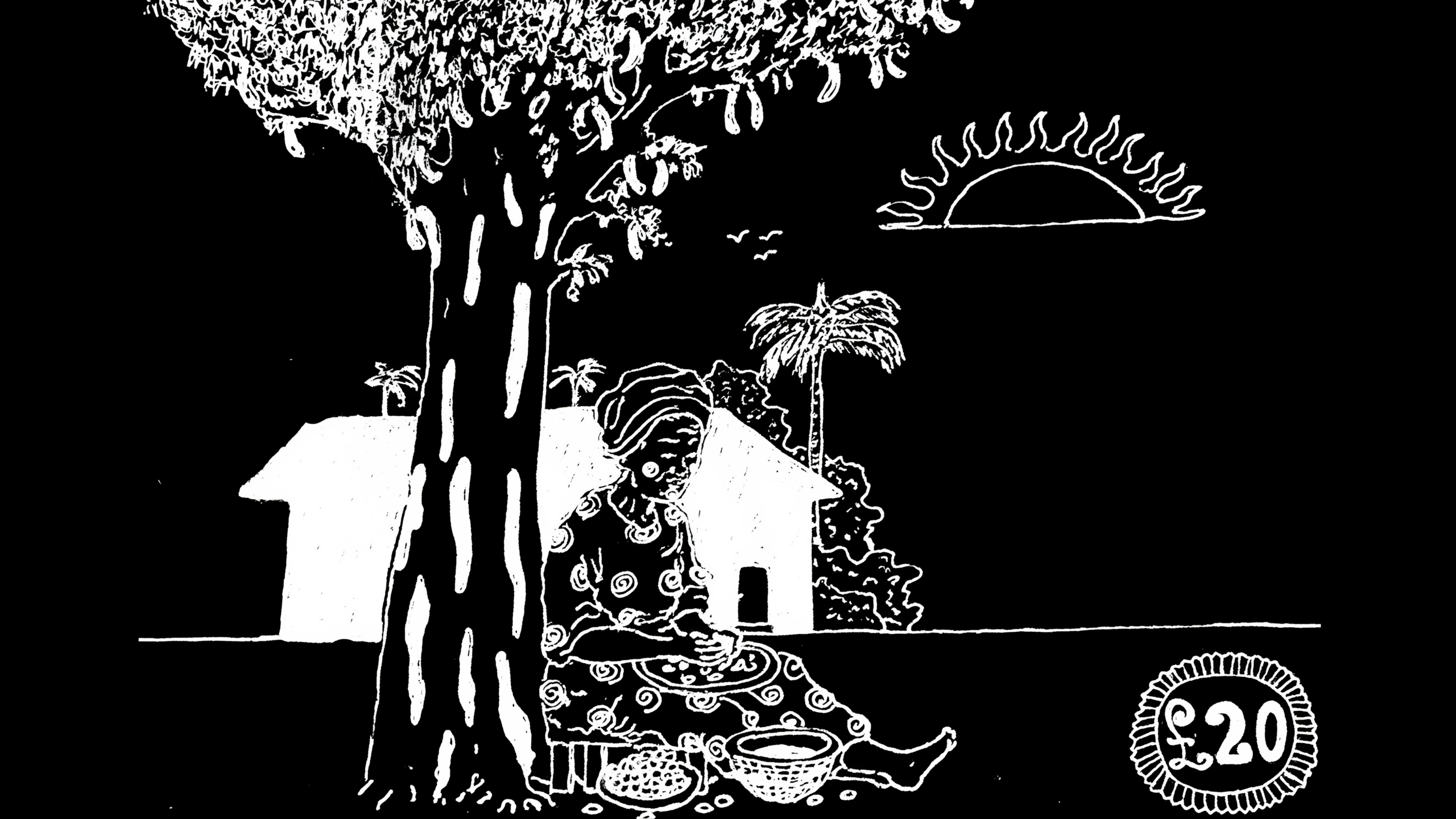
In a corner of the camp that they claim as their own, Oduwa, still in pain from the scars on his body, busies himself with the now cleaned bronze figurine. It is a small woman with pointed facial features, wearing a short wrapper and balancing a pot on her head. Asa watches Efua teach Iye Osayuki’s younger children call-and-answer stories, as their mother makes celebratory pepper soup and yam for everyone.
Since he received the news after they returned, Oduwa remained silent, and Asa left him to figure out his feelings. She also needed to figure out hers as well. She leans against the tree under which she is sitting and closes her eyes. She wants to remember. She is sure that if she digs enough into her past, it will automatically predict her future for her.
THERE HAD BEEN dissension between her village, which stood close to Ogwashi Uku and the Benin Kingdom, on the payment of tributes. It ultimately led to a big conflict. After her village was razed to the ground, in much the same fashion as the British had done to Benin, she was captured, alongside her mother, and many other women and young girls, as spoils of war. Upon arrival to Benin, as the only surviving child of her mother — one not even old enough to pass her hands over to her ear — she was split from her mother and sent to Igueben, as a gift from the Oba to a wealthy chief there; a token of appreciation for his assistance during the war. It was there that she was given the name ‘Izogie.’
After counting over 10 harvest seasons there with them, during an Igue festival, the new chief who had just succeeded his late father gathered her and some other young female slaves and sent them all to the Oba as his gift to felicitate with him on the festival.
She remembers that on her way into the city for the festival, she had looked up and seen her mother, badly bruised and mauled to death, hanging from a tree as a human sacrifice to a god who could control the rains. She remembers how she could not hold back the storm in her own chest, and she screamed till she lost her voice. When she got to the palace, Efua, who was born by a slave mother in the palace to a free man father who wanted nothing to do with her, told her that her mother had never stopped talking about her. That night, they huddled together on the bare ground in the sleeping quarters and cried themselves to sleep.
Benin took everything from her, and she wouldn’t have ever forgiven it, but for the sake of Efua and Oduwa, which it gave her in return.
She had met Oduwa after counting two harvests in Benin, the young artisan and free man who stole her heart from the first time he smiled at her at the market. She remembers all the times they spent together, during her leisure, and how much easier life felt when she was with him. She didn’t know then how it would come to be, as a slave of the Oba was only free to marry if pardoned by the Oba, but she knew that she would spend the rest of her life with this man who made her heart beat differently.
Now, even though she is pronounced free, she isn’t so sure anymore. What if he doesn’t want to leave? He is, after all, a free man, born of a slave mother who had married her master, his father. He is an artisan, a gifted bronze sculptor, and a member of the guild. His entire life is here. But she, on the other hand, is sure that there is nothing left for her in Benin. She has to leave. She has talked it over with Efua, and it is the only sensible thing to do. But what will she do without him?
When she finally opens her eyes, the sun is going down, and he is sitting on a low stool in front of her, watching her.
“I thought you were sleeping,” he says, his brows wrinkled in concern.
“No, I wasn’t. I was thinking. You seemed like you didn’t want to talk.”
“I was thinking, too.”
The pause stretches into a silence that tortures them. He focuses on somewhere behind her and beyond them. She focuses on his face, on the mud-stained bandage around his head, on the scar on his cheek, on the smile lines on either side of his mouth, the small line of hair crowning his top lip, and on how much she loves him.
“Efua told me you wanted to leave with her and her mother.”
The choice of topic jolts her, but she quickly recovers. Efua!
“Yes. We spoke about it on our way coming from the announcement. This freedom might be short-lived. We want to be as far away from here as possible, in case they decide to revoke it.”
“Where will you go?”
“I don’t know. We haven’t worked that out. Wherever we are comfortable, I guess. I might go as far as my actual village, connect with people who speak my language.”
“Are you absolutely sure that there is no future here for you anymore? Not even with me here?”
“There is only so much you can do.”
“The Oba is gone. Are you absolutely sure that you wouldn’t want to take a chance on us here?”
“No, Oduwa. I mean, yes. I want to take a chance on us. But here, there are no chances at all. Even if the white man says there will be. I know the people here. I will always be seen as a slave, as Izogie. I will never fully wash the stigma off. And who even knows about these white men? If they won’t bring in their own version of slavery? I understand you wouldn’t want to leave your home—”
“What home?”
“Your home, Oduwa. Benin.”
He scoffs and looks away.
“Asa…” Unlike everyone, he always calls her that. Right from the first time she told him. He prefers it to Izogie, and it sounds different when he says it, in that light, smooth Benin accent of his. Asa is sure his accent is the way it is because he had learnt Portuguese from his father, who worked with them, and English from the white priest he sometimes worked for; a result of all the languages fighting in his mouth. He makes it sound good, though.
When he turns back to her, there is a fierceness in his eyes.
“Asa, my home is wherever I make it. Not with my father or my mother. Since you are determined to leave, let us go together.”
It takes her a while to recover enough to ask: “Are you serious?”
“Yes. My mother is from somewhere near Eko, near the seaport there. And according to her and other accounts I have heard from travelling traders, there is a market there. Probably bigger than the market here! They say it serves the particular interests of artisans who are good at their craft, and I have been thinking of making the move for a while now. I am aware of how strict the laws here are for marrying a slave or, rather, an ex-slave, and I wanted us to go somewhere where we would be free to love ourselves. That was before the invasion happened. I don’t ever want to be separated from you, Nonyaenmwen. I want us to get married and grow old together.”
“What of your parents, your people? What will they say?”
“Oh. The only people that matter are my parents, and I have hinted to them already. I will tell them the details later. They will be fine with it. They were here when you were away, and I told them that I would never work under the white man, not after what they did to our sculptures. They do not respect us, and what will then become of me in a world ruled by them? What will become of us? I don’t want us to suffer shame and oppression anymore. When do we set out?”
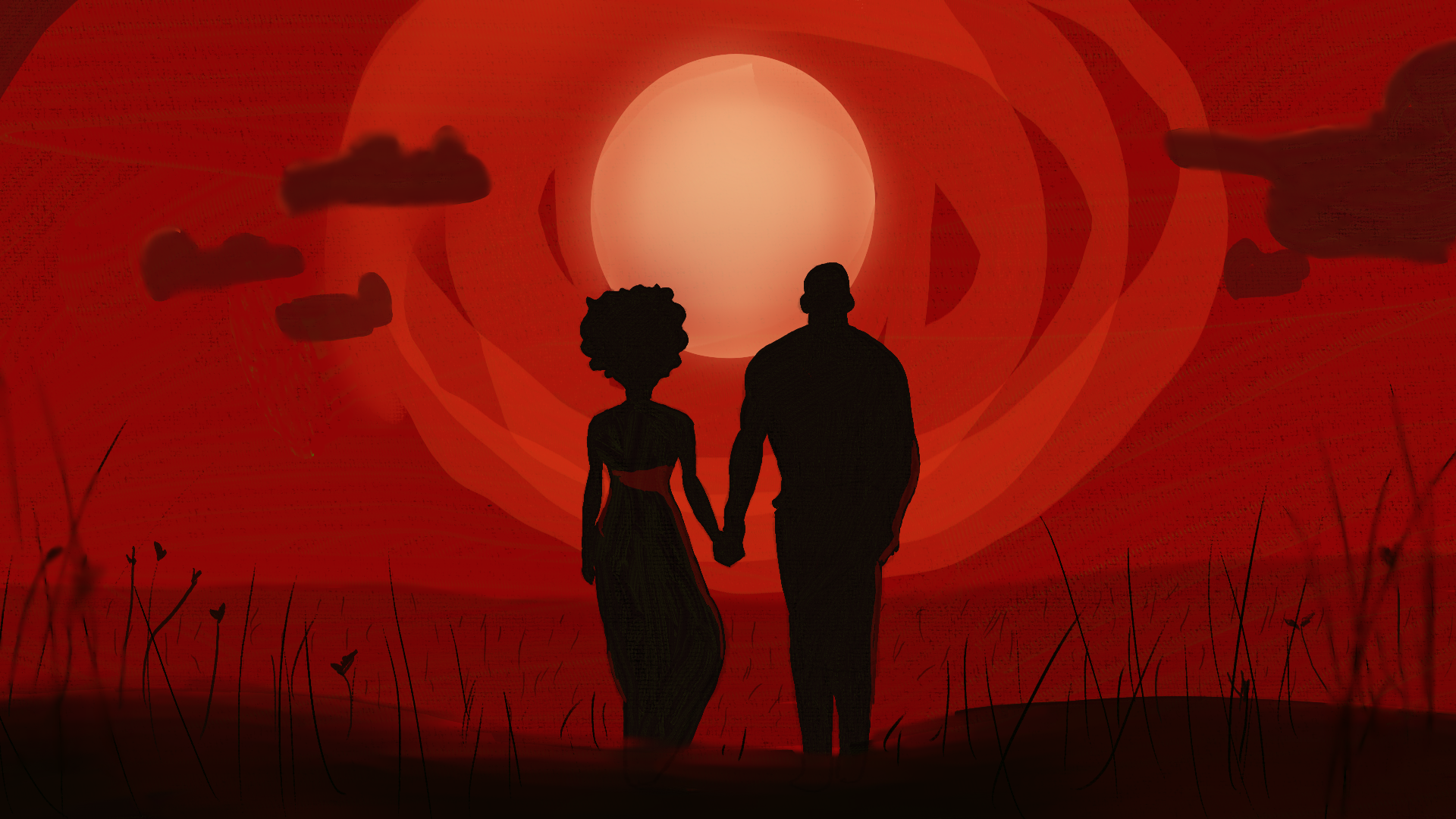
Asa smiles. Benin had fallen. But with this fall comes her future. One that has Oduwa — her Oduwa — and is already looking beautiful.
Mary Inibhojie Okaka is an over-imaginative writer with a degree in English Education from the University of Benin. She dreams of winning an Oscar, and her only claim to fame includes a short story published in SprinNG and several poems featured in Wax Poetry. Currently, she resides in Nigeria and works at a bank. When she isn’t pouring her soul into writing, she enjoys reading, working, or sleeping.
Cover credit: Ebumnobichukwu Agu.