In the Shade of the Branch
Ridwan Badamasi
Background
In December 1980, Kano, Nigeria, witnessed an 11-day violent conflict as heavily armed followers of radical preacher Muhammadu Marwa (Mai Tatsine) clashed with security forces, leading to thousands of deaths and the Yan Tatsine insurgency through the 80s.
Winner of the 2025 Awele Creative Trust Short Story Award.
TThe rumour sweeping Kantin Kwari was that Mai Tatsine and his followers had ambushed a police van, beaten the officers to death, and set their bodies ablaze. Now, they were supposedly targeting anyone in uniform. Garba had been glued to his radio all day, but he’d heard nothing of the sort—only static and the usual broadcasts.
Around midday, a dark plume of smoke bloomed somewhere far in the distance, and a siren rang continuously like an ice cream jingle. There was tension in the air now, wafting down like soot. Garba watched as stalls closed and shops shuttered down. He switched channels on the radio; no one was saying anything new. All day there’d been a kind of muted terror on the streets and avenues of Kantin Kwari, and the shops closing off seemed like a confirmation, a death knell. The market was closing down, as was usual during periods of unrest. People trotted past briskly, some almost breaking into a run. A woman screamed at the dan-dako hauling her load. A man struggled to extricate his wheelbarrow from mud.
The two brothers who owned the shop next to Garba slammed shut their door. Both had round, jiggling bellies. Both grunted as they knelt to lock the door frames.
“They’ll call in the military,” said one, with a short laugh. “I tell you the police can’t handle this.”
The other brother straightened, and he turned, as if addressing Garba. “The world is coming to an end,” he said with a solemn nod. He descended down the short steps and, looking up at Garba, without a hint of mirth, indeed with genuine concern, said, “It’s the end of the world.”
Garba watched them dawdle into the crowd. The acrid smell of something burning filled the air. And as he locked his door, he saw there were now three plumes of smoke in the distance.
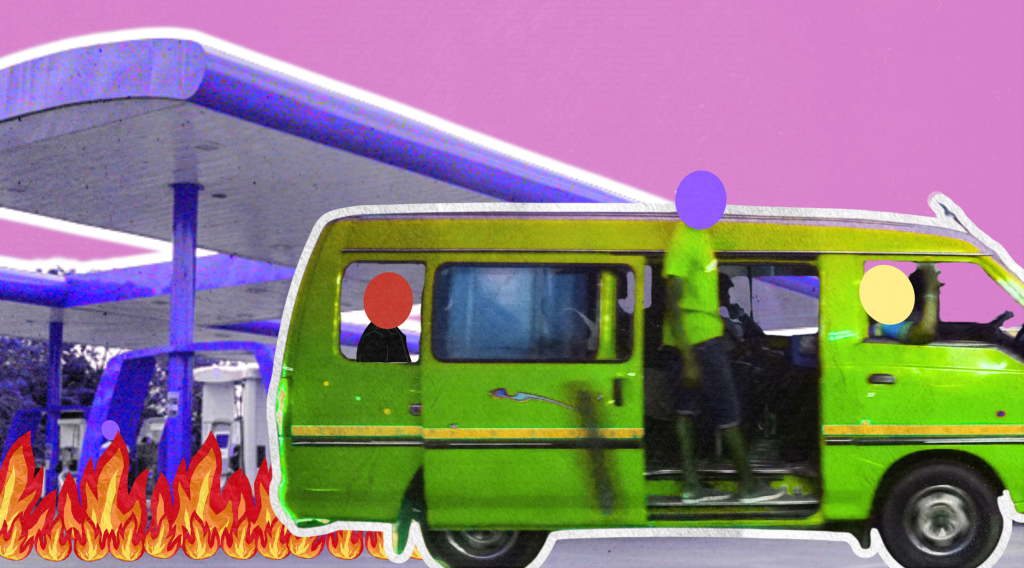
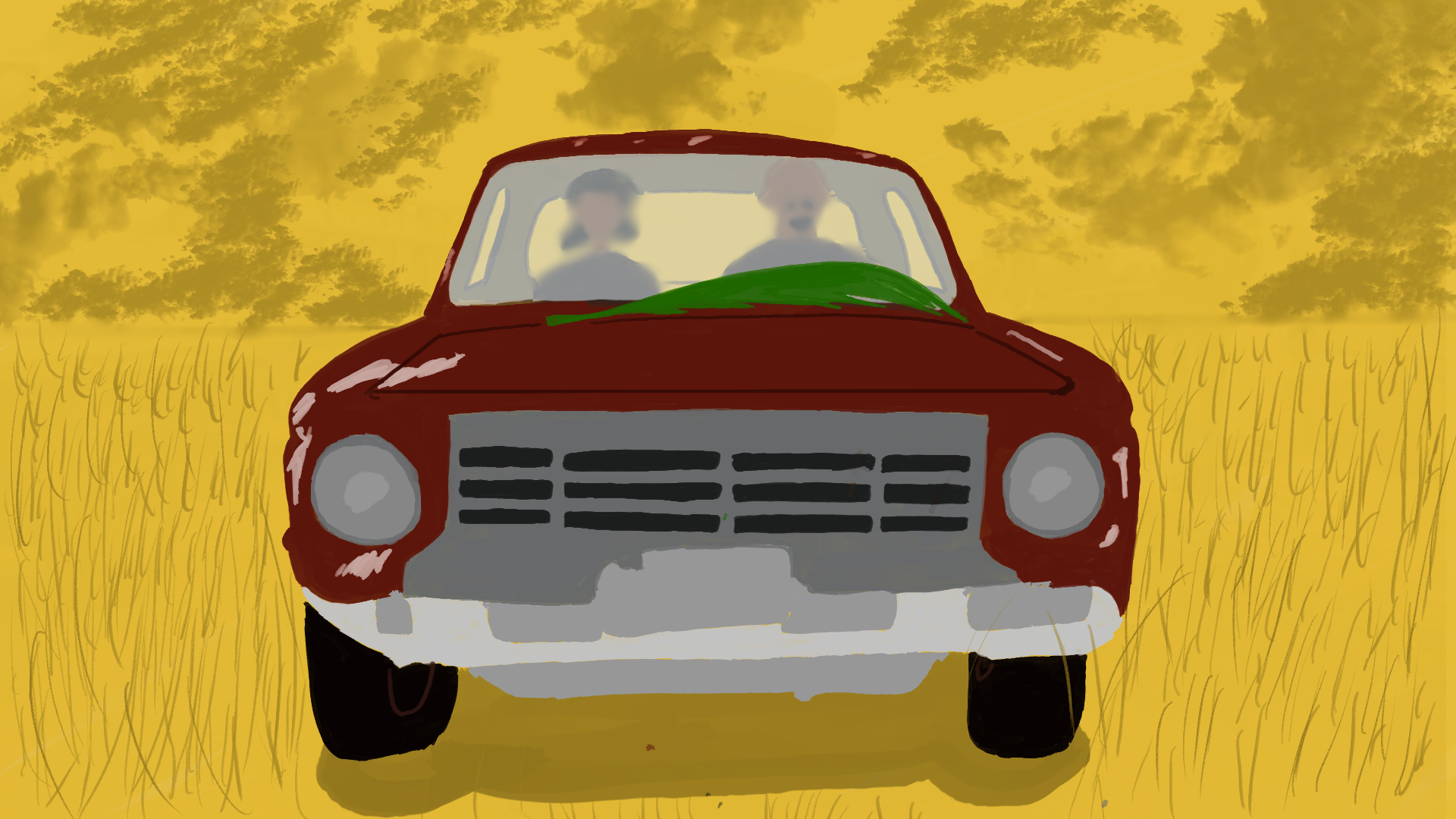
The road to Dan Maliki teemed with vehicles, most of them empty but armed with branches whose leaves fluttered out of doors and atop lamps, bobbing over exhausts like flags of parley. A convoy of buses were packed under the large poster of a bespectacled Shehu Shagari smiling down benignly, these too sporting branches and leaves. Garba wondered if the greenery somehow bestowed immunity upon the vehicles and their occupants. Were passersby also going to hold branches above their heads or perhaps tuck them into the sides of their caps? Even the traffic warden’s shed at the roundabout sported two thick branches on either side, thick leaves swaying in the hot breeze. The warden was not there. Perhaps there was some truth in the rumours, and every uniformed officer was in trouble.
The mood on Garba’s street was the same. Neighbours emerged from their homes, crowding in small groups and muttering amongst themselves with the expression of people who knew something was afoot but couldn’t find evidence of it. Some of the men who would normally be away at work, like himself, were at home. They were all repeating the story about the policemen; a few were off pointing at the columns of smoke.
Garba thought the blind panic was ridiculous, and it all annoyed him. It wasn’t just because he’d had to walk all the way home. If something was really afoot, surely there’d be something regarding it on the radio. And how incompetent could the police be that they’d be overpowered by Mai Tatsine and his followers? Garba had heard of the preacher, his fiery sermons, and his cursing. His followers had had brushes with the law over the years, but attacking a van full of policemen seemed a far stretch. After all, the police had guns and Mai Tatsine’s followers did not.
Garba salaamed to Mallam Abdu, who sat behind his counter, counting notes from his money bag with such concentration that he could only give Garba a bob of his head. Even now a customer entered the shop, walked over to the shelves, and took a bar of soap. ‘Level-headed people,’ thought Garba.
Mariya was pacing the yard when he arrived. “What’s happening?” she asked on sight.
Garba waved his hand in annoyance. “Rumours. Upsetting the whole town. Just rumours.” He shrugged off his soaked kaftan and opened the door. Mariya remained outside, face tinged with worry, eyes peering at the distance. Garba stared forward. “The smoke could be from anything. Don’t worry yourself over rumours.”
“Umar has gone out to play,” she said.
“He should be with one of those friends of his. He’ll be home soon enough.”
“But it has been some hours and —”
“Leave me be, woman! The boy will find his way home.”
Garba ducked inside to the slightly cooler air of the house. There was a bucket of water in the bathroom. The heat was oppressive, and his singlet was soaked through with sweat. He took off his battered wristwatch. It was only a few minutes past four.
Garba was pulled into wakefulness by a hand tugging his knee. He groggily sat up on the sofa. It was almost nightfall, and somewhere a radio blared static. He’d been having a bizarre dream, the details of which were fading even as he tried to remember them. He remembered he’d been at his shop. There’d been a woman and a bale of clothes, and when it was time to pay, she’d simply transformed into a large bird and took off with the goods under her claws.
“Baba Umar,” said Mariya.
Garba turned. “What happened?” he mumbled.
“I can’t find Umar.”
The words took a moment to sink in, and when they did, a chill ran through Garba’s bones. He jumped to his feet, snatching the shirt lying on the back of the sofa. The boy would most likely be at the home of one of his friends, he thought. But why did he feel dread?
“Have you been to Danladi?” he asked.
“Yes. They haven’t seen him all day.”
“Maybe he’s with that classmate of his. The one he’s always together with. What’s his name—”
“I’ve gone there. Inusa hasn’t seen Umar since they returned from school.”
It seemed that, for every moment he stood there, in the darkening light of the living room, the feeling of terror spread. Garba could no longer see Mariya’s face, only the whites of her eyes. He charged outside, feeling terribly guilty that he’d dismissed her concerns earlier. Somewhere, the first Maghrib adhan was ringing across rooftops. He burst out into the street, looking left and right, feeling so utterly lost. Where would he begin his search from? He heard Mariya behind him and told her to stay back in case the boy returned.
Garba went around to the houses of the boys Umar played with. The Danladis’ boy said they’d returned from school together. The butcher’s boy was down with malaria and hadn’t been out in days. With each home Garba headed to, each door he knocked on, his fears were being confirmed. At the Danejos’, their son claimed to have parted ways with Umar shortly after noon, and at Mama Bode’s house, the woman poked her head out to tell him, in heavily accented Hausa, that her son, Bode, knew nothing about Umar’s whereabouts. She wouldn’t let Garba speak with Bode.
Garba walked all the way to the bus stop, where he crossed the main road, keeping to the side lit irregularly by the sickly glow of street lights as darkness twisted down. He realised only a few minutes later that he was sweeping the streets for Umar, hoping to find him seated at some corner, waiting for his Baba to come get him. The heat streamed over his face as he crossed into the old district, which the rest of the town had expanded out of, and the outskirts of which one could still find chunks of Kano’s old walls. There were people out and about: children playing Langa in the sand, young men loitering around fruit stalls, and old men sitting on mats outside a mosque. Garba scrutinised the face of every child he saw, turning at every cry and shriek. He went around the suburbs, looping back on a dozen streets. It seemed like hours had passed when he suddenly found himself in an alley. There was the rumble of a huge vehicle ahead, and when he exited the alley, he found soldiers sharing cigarettes behind a van. One of them jabbed a finger in his direction and swung his rifle around. “Kai! Stop there. So you don’t know there’s a curfew?”
Garba ducked back into the alley, running, the patter of his feet echoing. He retraced his steps, sprinting all the way back. Now, he found no one in the streets. To his relief, the soldiers weren’t in pursuit, but he didn’t stop running until he got to Dan Maliki. On arrival, Mariya rushed up to meet him.
“Where is my son?” she wailed. She stamped her feet, let her scarf loose, and sat flat on the ground. She raised her hands wide, as if in invocation. “Wayyo Allah. Where is my son?”
Mariya’s agony was being surveilled by faces behind windows and by the eyes of the beggars with their bowls. Garba wanted to yell at them to go away. Somewhere in the distance, a siren blared. Garba grabbed Mariya by the armpit and brought her to her feet.
For the next two days, Garba and Mariya took turns circling the neighbourhood and beyond, knocking on doors within the 7 am to 8 pm curfew. The police stations in Dan Maliki had been barricaded shut, and policemen were nowhere to be seen. Soldiers patrolled the streets in vans and tanks. The mood was that of a brood of chicks frozen under the shadow of a hawk, unsure whether the great terror was passing by or alighting.
On Thursday, Garba took pictures of Umar to Kanawa Radio, where he was shocked to find that an entire ten-minute segment had been dedicated to children who had gone missing since the start of the crisis. He then made a stop at the printers and, armed with dozens of posters and a bowl of koko, went round the neighbourhood pasting them on walls. ‘Have you seen me?’ they read. There was a picture of Umar from his last birthday, and underneath was a number to the landline, which Garba had reconnected earlier.
When he got home, he found Mariya barricaded in the bedroom. She’d refused to rise or eat all day. He felt awful for shouting at her the other evening, and even more awful that he’d dismissed her concerns. Now, he wanted nothing more than for her to scream at him, to beat his chest, to blame him for their son being missing. Mariya did none of that. She wouldn’t even look at him. Garba turned on the radio in the bedroom corner and tuned in to the channel. He waited for the segment to roll past, and when it did, he found himself nodding — they’d got the descriptions right. His mind drifted to the telephone sitting on the table in the living room. His ears strained for the shrill ring, his whole body hoped for good news. He sat beside Mariya on the bed and patted her feet. “We’ll find him,” he said. “I promise.”
On Friday, they received the ransom note.
It’d been slipped in through the louvres, and it sat on the window’s metal frame: a square of paper folded into a white envelope, the very thin edge poking into the living room. Garba had been on his way back from the mosque, where the imam, after the morning prayers, had led the congregation in a prayer for Umar. Then he’d shuffled home, his head buzzing from lack of sleep, and when he saw the paper, his first thought had been to ask Mariya if the previous month’s NEPA bill hadn’t been delivered already. The dawn light was bright enough to read with, but Garba couldn’t digest the note until he’d shone a torchlight on the printed words.
‘We have Umar. Tomorrow, come to the river at Dotsa with ₦9000. No games.’
Garba sat flat on the floor, half relieved and half stunned. How did Umar get kidnapped? And how would he gather that amount of money within a day? The only way was to sell everything they owned. He thought about the rows of atampa, lace, and brocade in his shop. There was no question as to what needed to be done. Mariya, wet from her ablutions, found him there. He handed her the note. She went to the bedroom and came out moments later with three jewellery boxes containing all the jewellery she owned, some of them her wedding gifts. She snapped them open with trembling hands, the velvet inner linings spilling necklaces, rings, bangles, and a handful of precious stones, falling out and bouncing on the floor in a coruscating kaleidoscope of colours. Dawn had suffused the air with a soft orange light, and the living room lit up—the lacquered centre table, the radio, the sturdy television, the pressing iron, and even the red carpet worn through to a brown gauze.
“They burned someone here yesterday,” said the man seated next to him.
Garba stared at the mound of ash as it loomed closer. It looked like any other spread of ash you could find beneath a Mai Shayi’s cauldron or in the kitchen or cooking space of a random home. Around the ash was a dark, vague outline. It couldn’t possibly be a human being, Garba thought. He peered closer and gleaned what seemed to be a tooth, glistening sharp like a shard of ceramic. Bile rose up his throat. He blinked rapidly and averted his eyes. The idea of a human being reduced to a mound of ash seemed too unsettling to contemplate, so he cast his thoughts on the journey ahead.
The bus conductor was quiet, his demeanour at odds with his appearance. He rubbed his pigtails as if trying to flatten them and pursed his cigarette-charred lips as he collected the fares. There were no arguments regarding change; no wanton displays of thuggery. They drove on morosely, sometimes the only vehicle on what was usually a very busy road. They went past the police headquarters, where the windows were covered with newspapers and the front doors were barricaded with sandbags. At a checkpoint on the city’s outskirts, three sweating soldiers held up gloved palms, and the bus slowed as the driver navigated the barrels placed on the road. The soldiers began a search of the bus. A few meters off the side of the road, their van, complete with a gun turret, wavered in the heat. They peered into the bus, barking questions about their destination, about where they were coming from. One of them, stone-faced, demanded they all come down to be searched properly. The driver exchanged a few words with him, including a quick handshake, and was waved on.
A battered sign flashed past, saying Dotsa was five kilometres away. The road wound around tilled farmlands. The first rain had fallen only a few days ago, and the farmers must have planted their seeds already. A herdsman flashed past with a herd of cattle. Settlements were scattered about, some of them no larger than a collection of thatched huts. A range of hills stood in the distance.
The driver switched on the radio and flitted through channels. A grave show host announced that the authorities were searching for Mai Tatsine. Anyone with information as to his whereabouts was implored to forward it. And was the federal government going to declare a state of emergency in Kano now that soldiers were already all over the streets?
All at once, the bus was drowned in noise. Passengers speculated and recycled rumours. One woman at the back said her mother-in-law’s cousin, a policeman, no longer wore his uniform outside. A man at the front said he was returning to his village with his family. Another wondered if anyone could be safe when the police themselves were targets. All Garba could think of was getting Umar back. Besides, there was nowhere he could run to. He’d lived all his life in the city.
A few moments later, the river flashed, glistening blue and brown, and Garba alighted. As the bus zoomed off, he felt for the comfortable weight of the thick envelope in his pocket. He fished out the paper, just to be sure, squinting his eyes at the spelling of Dotsa. Down the dirt path near the river, the heat was prodigious, but cool air blew in from the river. Canoes lay by the bank, half in the water. Some were upturned by the side, apparently discarded.
A metal shack shimmered and glinted down at the end of the path, and halfway down, he heard a succession of whistles, which he determined had come out of the shack, and he went on, the path twisting around trees and shrubs, dry grass crumbling under his feet, with the riverbank always in sight. The shack was all rusty zinc supported with slabs of wood. Garba looked around, wondering if he was being watched. There was no one in sight, and he didn’t hear any sounds apart from leaves rustling slightly from the breeze and a frog croaking nearby. He knocked at the door, shouting a salam. The heat wafting off the corrugated metal was enough to sting his knuckles. He hoped the kidnappers had Umar inside. A quick exchange and he’ll be gone with his son; the entire nightmare over. Garba said a short prayer.
He bunched his sleeves around his palms and pushed the door. It wouldn’t open all the way, and it was utterly dark inside. The shaft of sunlight he’d let in only illumined two or three strides, and all he saw were rotten planks on the ground.
A voice bid him to close the door.
The air was stifling, and the heat tyrannical. The smell was of damp earth, but so close-up that it nauseated him. Garba cast his eyes around, and though they soon adjusted to the darkness, all he could see were vague shapes: tables, perhaps, or bricks stacked upon each other. The only light was the pinpricks stabbing in from the sides of the door.
“I have the money here,” Garba croaked. “Where is my son?”
“You came alone?”
“Yes. I’ve done all you asked.”
“And the money?”
“No,” said Garba. He tried to put as much conviction as he could into his voice. “My son, first.”
The man chuckled. Garba advanced into the darkness. His sandal caught on something, and he stumbled and fell to his knees. He’d hit his shin on something, and he remained there, willing the pain to go away. Sweat trailed rapidly into his eyes. They stung as he blinked.
“How do we know the money is not marked? How do we know the police didn’t come behind you?”
“Wallahi, I didn’t go to the police.”
The man chuckled again. His voice was measured, almost soft. He spoke with careful enunciation. “We have followed all your movements. We watched you at the bus stop. We’ve been watching you from the beginning. If you had contacted the police, you would not have met us here.”
Garba closed his eyes and sagged on his haunches. He became aware that the man was pacing. He could hear him breathing somewhere to his left.
“I just want my son,” said Garba. “His mother is sick with worry.”
“Hmm. Mothers worry about their children. Your boy, Umar, is being taken care of. We had faith in you that you’d deliver. We don’t usually do that. Trust is hard to come by these days. Sometimes we show our seriousness by sending the family an ear or a finger.”
Garba gasped.
“Some are still foolish enough to involve the police. We find that very annoying. A breach of trust. At that point, we take more than ears and fingers. When someone comes to you with a clean conscience, it is only proper to engage with an equally clean conscience, eh?”
“But I’m telling you I haven’t gone to the police,” said Garba, feeling a wave of nausea.
“Throw the money over here.”
Garba had started to entertain the sickening feeling that the kidnapper—or whoever this man was—did not, in fact, have his son. He considered mustering some defiance, but perhaps they did have Umar after all. Perhaps he was being held outside and would be released at some signal. Garba threw the envelope into the dark. There was the sound of the envelope unfolding, crisp notes crinkling and sliding over each other.
“Good,” said the man. He paced for a bit. “Now, listen. Let’s consider a boy who is missing. A boy who wandered a little too far from home. He’s playing with his friends, and they lose track of him, perhaps. The boy is a bit challenged, not very vocal. He is unable to communicate the fact that he is lost. He wanders the streets. Night falls and maybe someone notices a boy standing awkwardly by the roadside. He looks clean and well-fed, so he’s definitely not an almajiri. This person tries to get the boy to say where he’s from, but he’s unsuccessful. This person takes the boy in out of the kindness of their heart. There are very few such people these days, you know. The next day they hand over the boy to Mai Unguwa, who, in theory, knows everyone residing in his district. But the district is no longer a collection of huts, you understand?”
Garba swallowed. “Are you saying that—”
“And of course, it’s quite unfortunate that they can’t immediately report him missing because the police are, one might say, occupied. So, the boy is taken to an orphanage. A home for children abandoned, children lost, children forgotten, children far from home.”
Garba’s head throbbed. A rush of white-hot rage rushed through him as the man spoke. He had the impulse to seize the man, choke him, and force out the whereabouts of Umar from him. He didn’t remember lurching forward; he caught a grip of the man’s collar, but the man danced out of his reach. Garba spun. There was a whoosh as something sliced the air, and he was on his back, temple pounding, a noise in his ear like a church bell tolling.
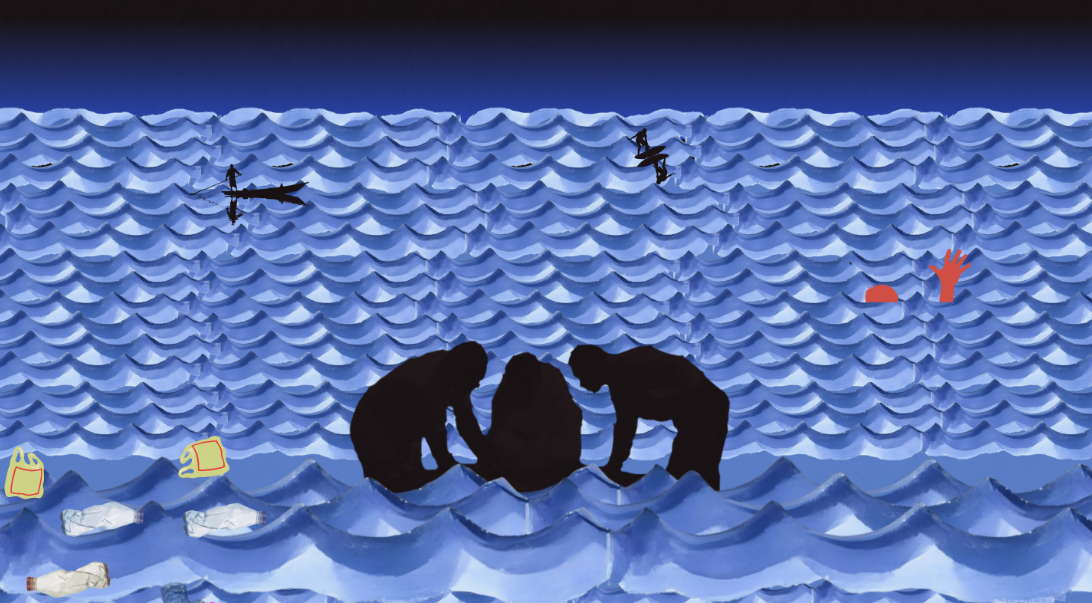
He must have been out for less than a second because he willed himself to his feet just as a dash of blue flitted out into the sun. Garba hurried towards the door, squinting at the light. He scrambled out and tottered about like a drunk trying desperately to find his balance. A bird sang somewhere in the trees. Garba ran down the path, parting the tall grass and slapping off insects that flew into his face. He stopped at the river; he could see the path stretching all the way to the highway, and it was empty. He drank in the cool breeze that wafted in from the river, a drastic change from the thick heat of the shack. A trio of giggling boys pushed a canoe into the water and jumped in as it cleared the bank. One of them stood, shielding his eyes and gazing into the distance as his companions worked the oars; he turned around as though he could feel Garba’s eyes on him. He was lean, somewhere in that stage between childhood and adolescence. The tails of his blue shirt danced as the canoe ferried them into the distance.
Ridwan Badamasi writes from the ancient city of Kano in northern Nigeria. His works have appeared in Praxis Magazine, Kalahari Review, 20.35 Africa, Efiko Magazine, and elsewhere. He’s the co-winner of the 2024 Nigeria NewsDirect Chapbook Series and the winner of the 2025 Awele Creative Trust Short Story Prize.
Cover credit: Ebumnobichukwu Agu.