Nzalambi
Isaac Kilibwa
Background
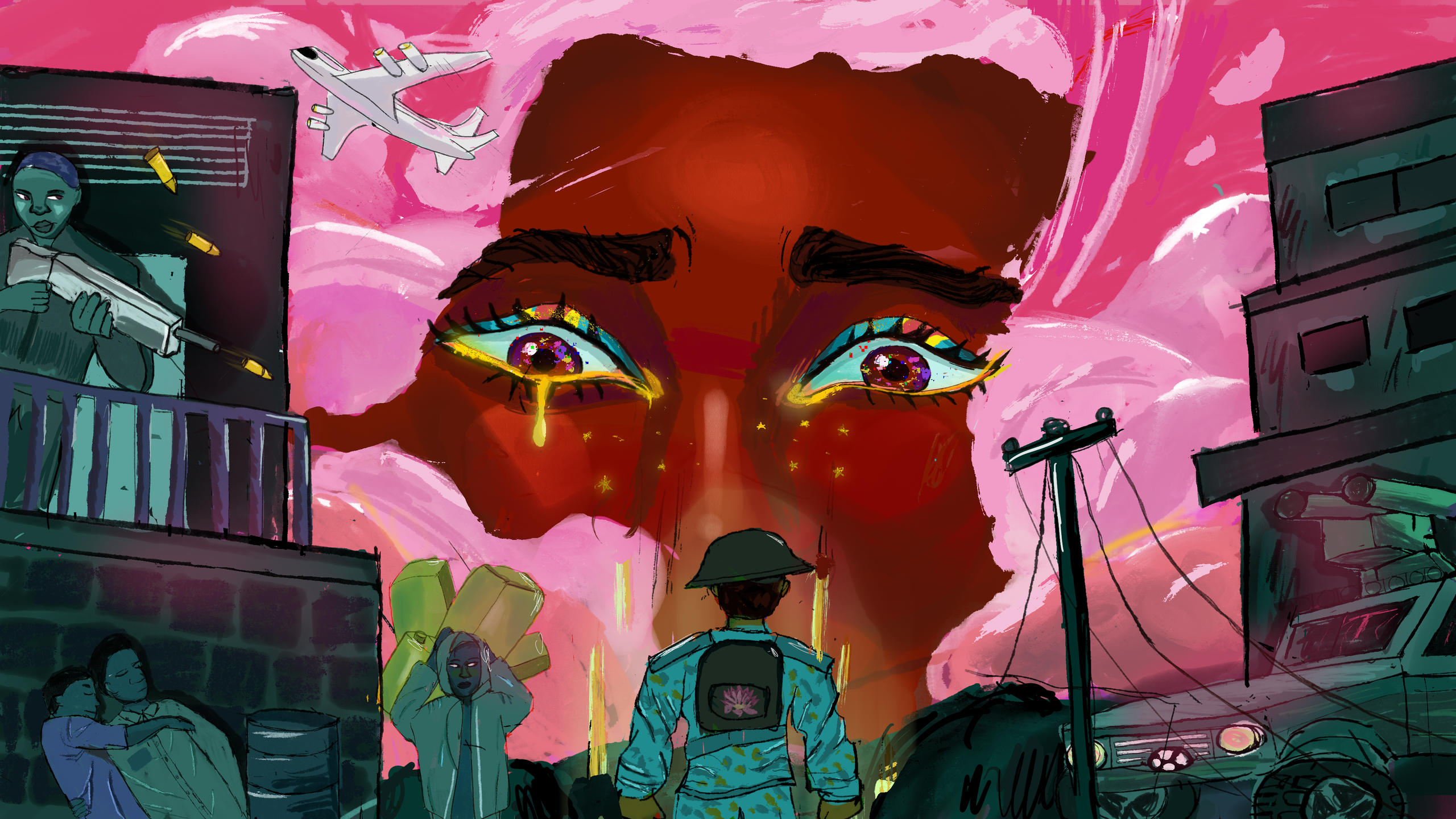
On June 25, 2024, Nairobi, Kenya, witnessed widespread demonstrations as Gen Z protesters clashed with security forces over the controversial Finance Bill, resulting in deaths, injuries, and a nationwide wave of unrest.
Nzalambi: such a beautiful name for hunger. Such a full name for yearning. I was head over heels in love with her. Not in a reckless, crazed, fixated manner, no. It was more akin to waking up each day, reflecting on each moment, and choosing to be with her. It was deliberate. I wanted to be with only her, my marvellous hunger. To hold, to cuddle, to lie down with, to wake up to only her.
We were introduced when I was at my least flattering, on the most extreme of blind dates. My friend and former roommate, Edu, happened to be the happy bridge. He and I were watching a football match while we took tea. We’d agreed to meet for the game after some furious banter we’d been engaged in on social media. Edu wished my team a loss after we had beaten them the previous weekend. Holding up my end of the teasing, I punctuated every sentence I spoke with, ‘It’s lonely at the top.’ As we caught up, he asked about my girlfriend.
‘Ha, brathe! I haven’t seen her since last October,’ I informed, stirring the contents of my cup.
‘Wah, ngori. That’s serious. You take tea with sugar?’ he changed the subject.
‘Of course. I haven’t grown rich enough to not afford to,’ I went along.
‘Imagine. I don’t.’
‘Man, those are rich people’s problems. You know, ‘how do you pronounce bourgeoisie?’ problems.’
Edu chuckled and then grew pensive. ‘Yo, there’s someone I want you to meet.’
‘When?’
‘Right now.’
‘Where are they?’
‘On their way.’
We’d waited until the game ended. The elephant still refused to come down the tree. It was to be another week of it being lonely at the top. Then we waited a while longer. I’d begun to thank the stars, had even paid our bill, and was bidding him farewell as we headed out. Two girls then walked through the lobby. We were forced to go back inside, and Edu made us exchange names. In spite of my misgivings, it had been a pleasant evening. I confessed as much as we stood on the stage, waiting for my transport home.
Impulsively, I handed her my blue water bottle. She hesitated a moment, as if deciding what to give back, then shrugged off her polished brown leather backpack. She pulled out a hardcover novel, The Prince of Fire. She held it close to her chest, her eyes shut. Maybe it was a parting hug, maybe a way of saying, ‘with all my love, even as young as this bud is, believe me, it shoots off of a giant oak stump…’ Maybe it was nothing, but I liked it very much. She stretched the book towards me, even as I commented, ‘For a moment I thought you were going to hand me a Bible.’
We laughed. It started as a chuckle, soft, then bubbled into earnest giggling. It was not long until we were howling with mirth, doubled over at the bus station. Two security guards, tired from working all day and impatient to close their shifts, stared, their drawn faces sporting lackadaisical smiles. The driver revved the engine. We stood staring into each other’s eyes. Then she gave me her left hand.
‘Now that we’ve been hugging so much today, take this as code for hugging.’
We had not hugged once, but I let it go. I took her hand in mine.
‘Come with me.’
‘Where do you want to take me, home to mum?’
‘I have a mind to take you to church.’ I answered.
‘Go,’ she persuaded, ‘before night makes your seducing even more compelling.’
And she should have kissed me then because time, nonchalant as ever, chose to bypass every promise I made.
On the eve of the day when Gen Z led the country in protest of a punitive finance bill, I went to watch a play at the city theatre. Nzalambi had starred in Edu’s play, Esese, and quite a spark she had been as she crackled amidst an orchestra of cellos and drums. For an hour and a half, she had been a ten-year-old, hawking plums on the yellow line of a superhighway; a teenager in a day school, writing rhymes and dreaming of rapping; a college girl, dazed in the lights of county government SUVs and their preying occupants; and a chips-selling graduate, now aware that Shakespeare’s stage wasn’t a place for dreams. It was her best performance yet. After the admirers had taken pictures with the performers, we strolled by a nearby street, waiting for our ordered ride.
‘So, how was it?’
‘Beautiful.’
‘And…?’
‘And?’
‘Come on. You always have a different meaning for that word.’
‘There may be a part of the crowd that comes to you to escape from reality.’
‘Tell me, Yi,’ she says after a pregnant pause. ‘Do you think this world is meant for people like us?’
I pulled her into my arms and whispered that I didn’t know.
The city sighed from the exhaustion of day. A car roared away from the street lined with buildings that were adjacent to where we stood. Street lights blanketed us, indulgent of the late-night company. They looked like coconut trees with their crowns ablaze with white flames. A drizzle fluttered in the luminescence and onto our trench coats. We swayed in a comforting dance, a shed of solace floating on a lake of drowning stars. And so I had held her, a metaphor of a city, sobbing onto my breast.
On the way home, we talked about the vacancies advertised by the Ministry of Youth, Sports, and Culture. Nzalambi let me know that Edu had applied for one. ‘Though it’s obvious that the positions have already been filled,’ she said.
‘A preserve for people who know people?’
‘Right. And those with enough money and brazen audacity to afford it. Corruption, you know, as Wandia, my prof says, is not so much immorality as it is cruelty.’
‘Yes?’
‘Yes. So Edu goes to the public service offices to apply for a certificate of good conduct and guess what?’
‘What?’
‘They tell him that it will take two to three months.’
‘And the deadline for application is in four days?’
‘Three days.’ She checked her wristwatch. ‘Twenty-two hours, and fifteen minutes.’
‘Wueh, noma—tough!’
‘So this young lady tells him he can go home with it if he gives her two thousand shillings.’
‘And he gave her the money?’
‘You bet. But if you ask him how he got the certificate, he says, ‘Ni God, manze!’’
That cracked us up. We were cackling like hyenas in the car as her stop came up, just by the city stadium. It was what everyone who became successful through unscrupulous means said these days when asked how they made it. ‘It’s God, my guy.’
When the vehicle pulled over, she pulled out her phone and paid the driver. ‘You see the irony, right? That we live in a world where you have to commit a crime to get a certificate confirming that you’re not a criminal?’
We said our good nights, and the driver resumed my own stretch of the journey. Next up on our way was The Junction. It was really a roundabout under a bypass that had been titled The Junction for the traffic jams it had been famous for causing before the superhighway came to pass over it. Home would have been in our sights if we had turned a simple left, but the driver ignored the tangent and went around the curve. Alarms immediately went off in my head.
I had always joked that I would die laughing if I sat at the front of a vehicle that had a head-on collision. Humour was exactly my first reaction, as I remembered a nerdy pickup line about Toby, a mathematician, wanting to lie tangent to a woman’s curves. A comment to which someone had intoned that Toby just wanted to make love to his calculator. I called out, though, that we had missed our turn. The driver replied, ‘We’re just fine, Yi-zhou,’ and I knew I had been reached, as they say in Kiswahili.
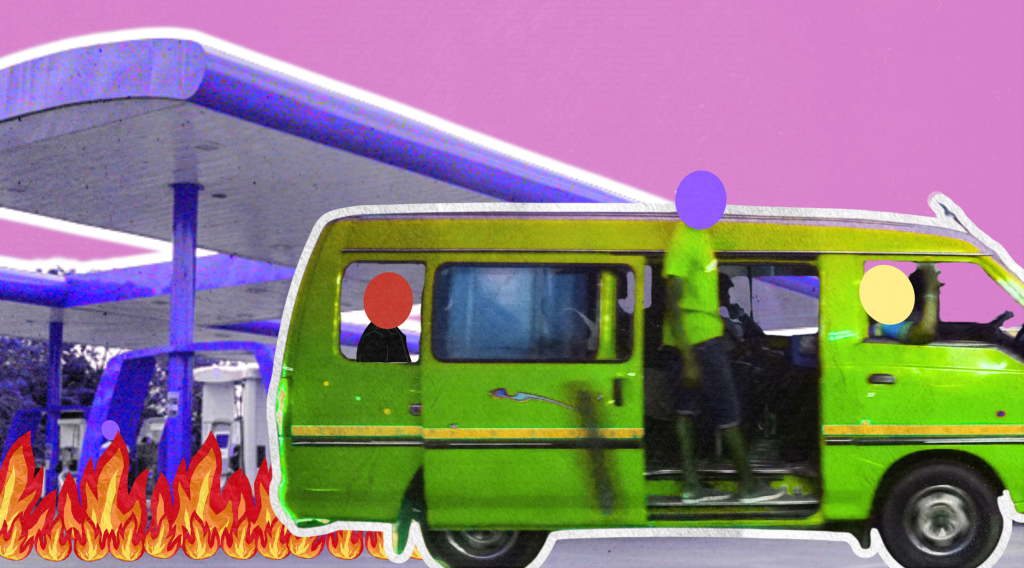
We made our way out of the flat-stacked estate, where the working class lived. We took a detour for the scenic view of the slum with its carton-box-walled shacks. At a road bump, light filled the car from behind. I turned only to have my eyes bathed in the glare of an SUV. We had company, our very own escort, I speculated. It was not long before we left the misery behind and cruised along tree-lined streets. Glass buildings whizzed past until we slowed and crawled into the underbelly of one. The elephant that had been trailing us through the modern jungle stopped by the entrance, its lights beaming into the night. We alighted. The driver knotted a pair of handcuffs on my wrists, tight enough to make me wince. The lights behind us flashed twice, then the car reversed and drove off.
‘I must say, you did admirably well,’ the woman spoke into the darkness.
‘Huh?’
She pulled out a flashlight and leaned into the small of my back.
‘Walk.’
We headed towards a metal door about five feet wide. She knocked twice, and the door popped out of its frame and slid away along the wall. We stepped into a lift that went down instead of up. The lift opened into a musty hallway lined with doors on either side. They had paint peeling off of them like dead synthetic skin. A single halogen bulb hung halfway down a corridor roughly fifty metres long. Perhaps it was longer; I was not sure. There was no more light ahead, and I did not see a wall. We went past two doors and stopped at the third on the left. The driver pulled the phone from my pocket and nudged me into the door. It creaked open even as I stumbled into a cloud of disturbed dust, making me cough and sputter. I heard her bolt it from outside and patter away. The inside was pitch black. I pawed my way awkwardly through the absolute unknown until at last I touched a wall. With my back to it, I slid down slowly onto a powdery, dry blanket of what must have been silt.
It was a long, painful night. There were moments when I dozed off. At some point, I woke up to a grumbling stomach, a dry nose, and the side of my face on the floor. Someone had come in earlier and taken off the handcuffs. I had thanked them even as I remembered an analogy a politician had once given of how a man plucks a chicken alive, then gives it food for which it is grateful. When at last another man got me out, I was faint and pliable. I had grown accustomed to the darkness and the quiet. I tuned out whatever it was he was muttering, only wanting to sleep. I wanted to lash out at any inkling of noise, yet found I really could not summon the willpower to be concerned about things of the world. Outside, I squinted at the light and hissed. The man bundled me into a car—a police car, I noted, and chuckled. The saloon car then drove slowly out into the gentle serein and the aftermath of chaos.
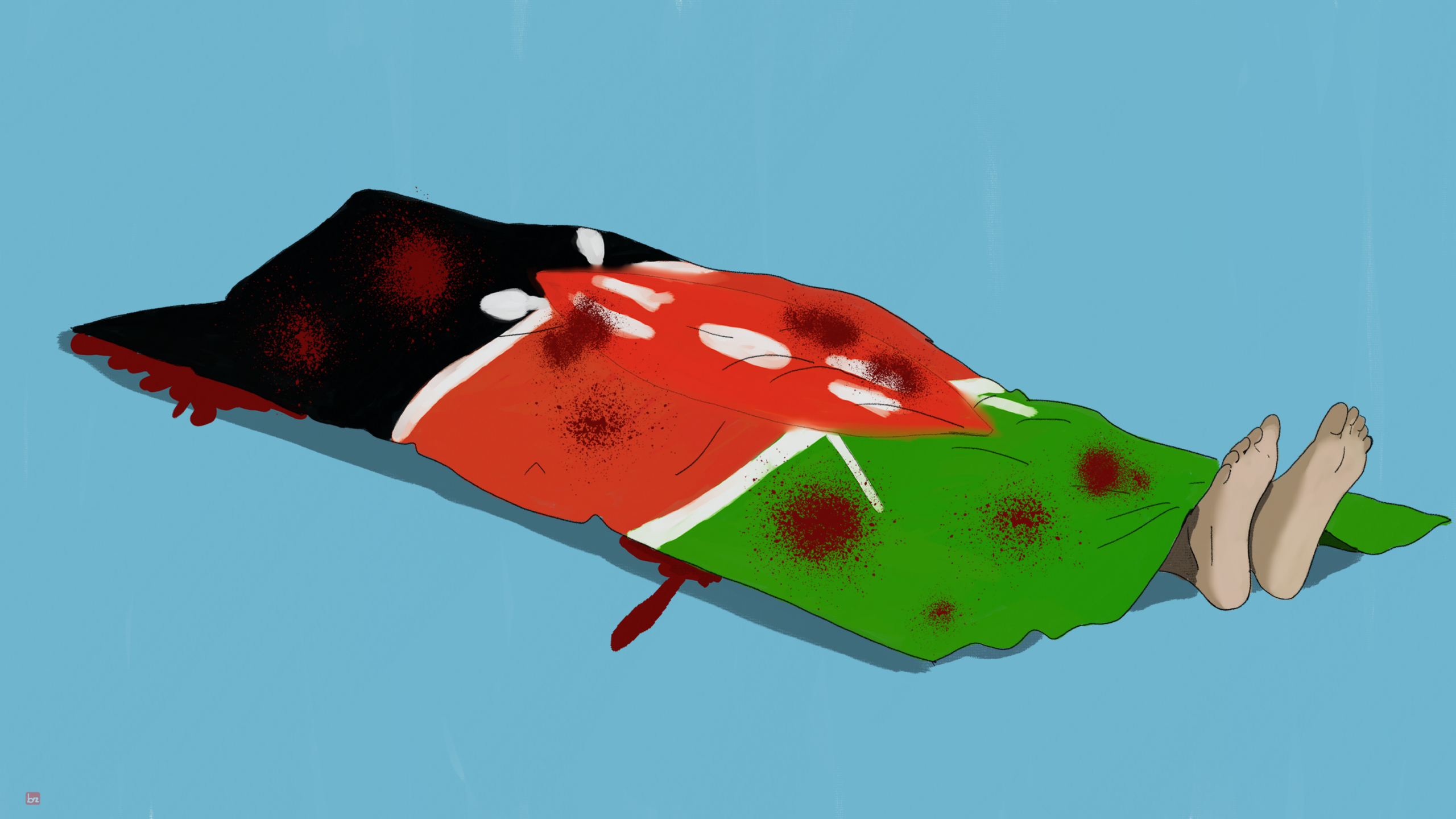
Flags the size of face towels flapped in the air. The Kenyan flag was a symbol for many things: black for the people, white for peace, green for the land, and red for blood. It could have implied anything. Unity, strength, pride. That day, it stood for defiance. It was a red rag to a charging bull. A target for the shots that rang into the cloud of tear gas and spray of pink-dyed water. Folded into a triangle, it served as a mask for the nose and mouth. As with all masks, it served protection and disguise. But underneath the righteous upheaval that swarmed the alleyways of Nairobi, something sinister lurked.
Pink water filled potholes and dripped off walls and lampposts. The air was choked with the smell of pepper. A high-pitched, disorienting ringing nagged in the city air. Tankers patrolled the roads, huffing and puffing in a choir of sirens. Near Parliament, a body lay on the cobblestones, wrapped in the flag. Blood seeped out of the cloth and into a rivulet. I heard someone sob. Shops gaped at the streets through jaded, jagged glass. Loot reached out from them and onto the pavements like outstretched hands caught between safety and terror. Mismatched shoes lingered in the middle of the tarmac, lost and forlorn. As night settled in, shots sounded far into the horizon, a gun salute for the setting sun, or maybe something more sinister. I had little will to care, even as we entered a police station beset by a huddle of lawyers and activists.
We spent the night in the cells, chanting patriotic songs. There were close to thirty of us, most of whom were mere university students. We sat on the floor, barefoot and starving. We had been stuffed together, both men and women. When our chants would fall into a lull, we would hear the lawyers, camped outside, urging us not to sleep: ‘bado mapambano’. The struggle was still on; they would exhort. At about two o’clock at night, someone brought us bottles of water. They recorded some of us cheering while others wailed. The president of the law society urged us to let whatever was within us out. ‘Speak,’ he said, ‘cry, hio kitu iwatoke,’ and pent-up as we were, we made a mourning ground of the station. A rumour went round shortly after that Yizhou had been missing for twenty-four hours. Someone said his girlfriend mentioned that Yizhou had dropped her off at home at night, the last time she had seen him. To that, we chanted ‘Free Yizhou’ until morning came.
We were let go at around ten, disgruntled and dishevelled. Drained out as I was, I worried for Nzalambi. I borrowed a phone and tried to reach her. She did not pick up. I tried to log into my social media account, but I could not. The phone’s owner let me use their account. My pictures were plastered all over the internet with a hashtag that echoed #FreeYizhou through the hive. In the midst of all the noise, I read posts from my account thanking everyone for their concern and reassuring them that I was safe at home. Some people demanded that I post a video while holding the day’s newspaper. The account posted that everyone needed to calm down, that the government meant well for all of us. I was shaking, even as I saw the back-and-forth play before my eyes. Someone commented that I was a traitor; another continued to refute that I was not the one posting. What took my remaining breath away was the new hashtag that rose to the top of the trends, just above #StopAbductingUs.
#FreeNzalambi.
I do not remember much of the past weeks. A reel keeps playing, mute, inside my head, which feels like it is stuffed with cotton wool. I know all the lines by heart, except that I cannot hear the voices. We are at the community hall. A break between rehearsals. I stand in the aisle, holding her hand. She remarks on how ‘cavernous’ the ‘auditorium’ is, marking the air with quotation marks using the index and middle fingers of her other hand. I say she reminds me of a story I’ve read.
A stampede flooded the town like streams in a swamp. Protesters danced and posted live clips for their social media accounts. At the OTC bus station, a gang of vandals broke into a supermarket. River Road swelled with a surge upstream towards Moi Avenue. Two girls wept at the statue of Tom Mboya. Further, at the junction of Kimathi and Mama Ngina Streets, a man bent the ear of Dedan Kimathi. He shook his fist at the monument of the freedom fighter, reporting. His voice hoarse with feeling, he listed ways he had been wronged.
A refrain echoed again and again from the other side of town, to the west.
‘Drain the swamp! Drain the swamp!’
It rose from Uhuru Park and past the Kenyatta International Convention Centre. The cavernous walls of the Holy Family Basilica hummed with the din. From here to the All Saints’ Cathedral, the avenue heaved with the indignant masses. Victims wept over their wounds. The faithful, heart in mouth, prayed. A doctor was shot next to a Red Cross van as she bent over a bleeding man by the gate of the cathedral. The Jamia Mosque opened its doors to the flood in a gesture of sanctuary.
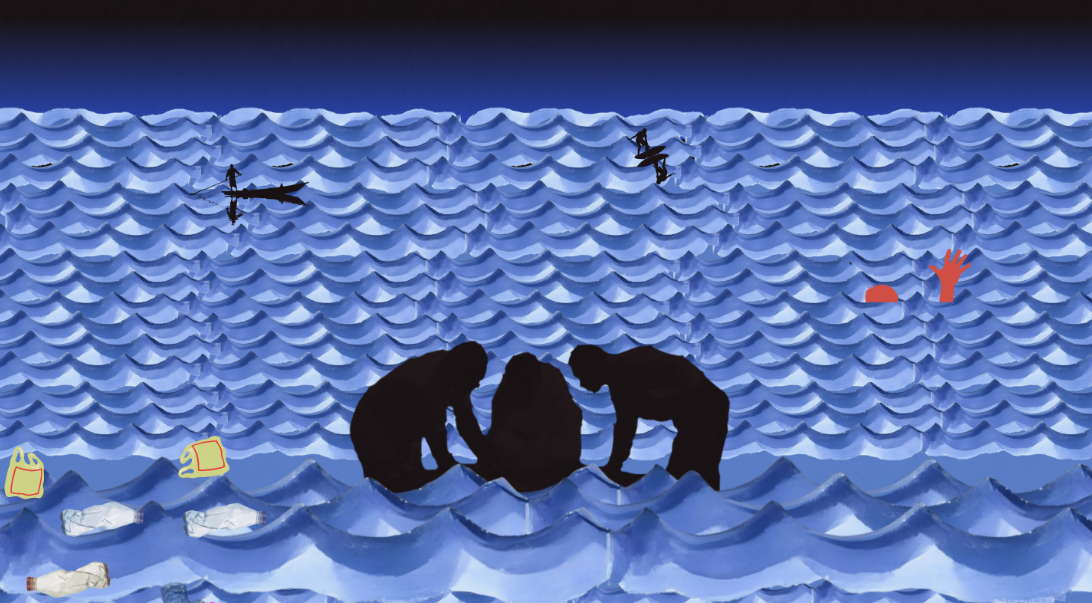
A Somali mother muttered over and over again, doubling over her son’s body. Her lips were miming a loop of Alhamdulillah. A pair was seen in the kitchen of parliament, gorging on remains of pilau and chicken. The legislators fled, leaving a man in a wheelchair behind. The youth pushed him out of the building, cheering. They ushered him into his vehicle and made way for it as it sped away. A man took hold of the mace and danced around with it, wearing the speaker’s gown. A mercenary took aim and shot. A manhunt descended upon a slum with the wings of terror. Gunshots rang out the whole night in Githurai. There was wailing in Misri when morning came. Amidst it all, a voice whimpered, ‘Free Nzalambi.’ She would be reported found a fortnight later, in a murky dam, bobbing gently in a buoyant dance.
The stench of betrayal reeked for days on end all over the country. Comrades who had been taken hostage came back with placating speeches. Some switched sides overnight and without shame. More youth were given up for torture and murder by friends. On social media, the hashtags trended. Some people suspected that phones were being tracked by network providers. Had the company sold the youth out? How was it that easy for the DCI to track down people who used pseudo-accounts to post on social media? They suggested a boycott. Others claimed that influencers were given millions to spread misinformation or stop posting.
The protests were marked with cruelty and double crosses. Youth sold out their friends for money and government positions. What was idealism in the face of fear, in the face of hunger? Philosophical hunger could wait. After being abducted and tortured, most changed their stance. For some of us, our abductions were faked to misdirect. We trended as heroes and freedom fighters. It was a masquerade. What had me gagging with the nausea of self-loathing was the report that more than sixty people turned up dead. Seventy-two went missing for their radical takes on social media. A man was taken because his brother made and circulated satirical graphics on Twitter. Orders were given on live television that protesters should be shot in the foot. A politician was alleged to have said that he would kill five thousand Gen Zs in a day.
The whole year would see people hunted down and abducted. The reels from eye witnesses and CCTV footage could only be described as surreal. Was it a year? Was it a day? It all blurred into a single event. One clip showed a man clad in administration police fatigues and a balaclava shooting a boy vending blue surgical masks, five feet away in the head. The hawker survived and was carried to the Kenyatta National Hospital on the shoulders of wailing men. He died there. A multitude chanted as they escorted a water cannon truck. When the army came, the people broke into a cheering frenzy. They wore face masks, bandanas and toothpaste for eyeliner. They danced around the military tanks and took selfies. After the successful occupation of parliament, a new hashtag trended. #OccupyStateHouse.
The dawn after the day of burial was shrouded in a mist that clung to the skin. Now, the sun flared like it was owed. A mirage flooded the forlorn stretch, burning the tender sisal thorns into brittle spines. The bus droned on, determined to make Kibwezi in a couple of hours. Lulled into a wavering trance, I rocked in the involuntary dance. My new phone vibrated with the excitement of a text. I glanced at it and sighed.
‘Confirmed. Your account has been credited…’
Isaac Kilibwa is a writer from Kenya. His works span from fiction and creative non-fiction to poetry. They have been hosted by Brittle Paper, The Hooghly Review, the International Human Rights Art Movement, Spelt, and elsewhere. When not writing, he teaches in Vihiga.
Cover credit: Ebumnobichukwu Agu.