A Land With No Spirits
Halima Geuya
Background
Between 2012 and 2013, Tanzanian authorities intensified evictions of pastoralist communities, including the Datooga, through operations such as “Operation Save Kilombero” and “Operation Tokomeza,” displacing communities from lands targeted for conservation and commercial agriculture.
“Pow! Pow, Pow, Pow, Pow, Pow, Pow…”
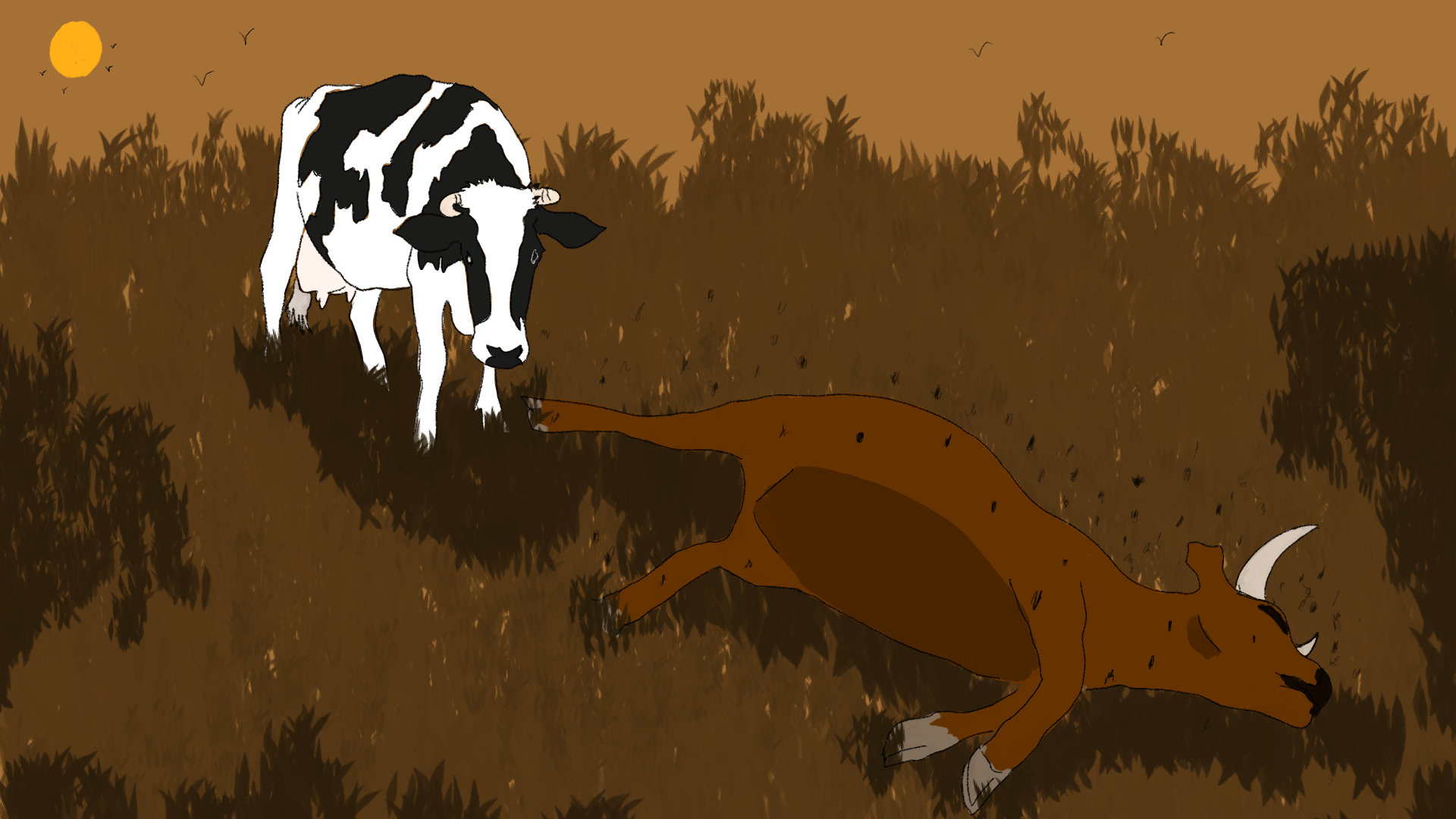
I was standing on a kigoda, peeking outside, watching. I lost count of how many, and just stood there staring as, one by one, they fell to the ground. I wasn’t shaking; there was no ounce of fear in my bones. My husband was pleading in whispers, pulling the sides of my skirt, begging me to get down.
It was hard to tell if they were park rangers, like the ones from Mikumi National Park, or military men from the way they held their guns. I’m sure they were all men, though. The way they turned and walked away, so coldly, so carefree after killing our cows in that manner. Who does that to a cow and just walks away? They look down on us and say we live like our animals; I’d rather live among animals than with the likes of them.
I stepped down from the kigoda I was standing on and ran outside, slipping through my husband’s grip. I ran straight to where they all lay. I did not care if those monsters were still near and could hear me. I stretched my hands and hugged her, the one I milked every morning. Her fur, brown as the soil and the houses at what was once home. She was my last reminder of home. I sat on my legs and let out a loud cry. Slowly, my people began to emerge from their bomas and join the scene. A bloody one indeed.
I was born right after Tanganyika’s independence. It was right before the beginning of a new year. My father named me Udamugh, datooga for waiting to heal. My mother said my father had picked that name for me because he had hopes that once and for all, we were finally going to be free, after long years of suffering that we had endured the entire time the white man ruled our country.
“The first white men killed a lot of us because we dared to resist their rule. We became weak, so we secluded ourselves to recover. Then, the second white man placed an alien tribe’s men to rule over us because we were marked ‘difficult’. Apparently, our many cows didn’t fit right with the white man’s big farms. Our ways didn’t align with the white men’s labour system. So, when independence came to our country, your father hoped that things would finally turn around for us. Hence why he named you Udamugh,” my mother said.
Unlike my father’s positive hopes, things did not turn around for us. I was a pre-teen, the same exact age as my ‘independent’ country, when my father handed me, my mother, and our cows over to my uncle because we needed to run for our dear life. A lot of my people were running as well, from Hanang, in all directions within our country. As one of the finest blacksmiths in our community, my father was required to stay behind and fight for what remained of our lands. My uncle grabbed us tightly and led the way out of Hanang, alongside some of our people. I still believe he was crying that night, or perhaps the tears in my eyes were too much that everything I could stare at looked wet and blurry. There was pain in my chest. It probed and hurt harder with every step I took. I didn’t care that my mother’s hand was pinchy through the tight grip she held on to me. I kept looking back wondering if I would ever see my father again. Today, I carry so much resentment for that little girl whose innocence was cut short that night, because I knew that was my last glance at my father’s face.
Through darkness till the next darkness, till next darkness, we kept running – out of Hanang and away, as far as ours and our cows’ legs could take us. I don’t remember how many days it took us. I only remember heading south, and my mother’s grip on my hand the whole walk – how tight and strong she held on to my hand, as if her sanity depended on her feeling my physical presence through her hands. When we passed the home for wild animals, we knew we had arrived. But they called it Mikumi National Park and said it was ‘protected’ land. Protected! From whom? We did not understand. So we walked a little bit north from Mikumi and arrived in Kilosa. The lands were strange to us, but it was all empty wildness of healthy and rich grasslands. Our cows’ bellies could be full quickly. So, we chose to settle there.
My uncle told me that a new white man had arrived in Hanang, blessed by the very people claiming to have ‘fought’ for our country’s independence, “Our own people had sold our lands to the white man,” my uncle said. I did not understand. He said that our own government had turned on us and was helping the white man to evict us. This white man owned all of Hanang, apparently. All of our homes. The home to the spirits that have protected us since the times when we could speak to northern stars. My uncle said that this white man was going to turn all of Hanang into a big farm. He was going to plough out all of our Bung’edas, the graves of our most honoured ancestors! He was going to plant wheat, a food not even our neighbouring farming tribes knew of.
Life in Kilosa settled quickly, and so was the dark cloud which had followed us all the way from Hanang. My mother never spoke of my father, but kept going into the forests looking for the ‘right plants’ to make fermented milk. I knew the exact plants she was looking for. She used to put it in my father’s milk. She never found those plants in all of Kilosa’s wilderness, but kept looking for them until her legs gave up walking. My uncle, on the other hand, would disappear for days. And every time he was back, I said a prayer to our ancestors that he give up trying to go back – I knew. We all barely talked about those we left in Hanang – out of pain, yes, but also, a Datooga doesn’t accept victimhood from anyone. I never saw my father again, nor many of my uncles and aunties, who remained to fight for our lands. However, the dark cloud that followed us from Hanang never left. Because, after nearly three decades in Kilosa, the second eviction came. This time, I did not have my uncle to lead the way or my mother’s tight grip on my hand. They had both already transcended into the spirits’ world. We all fled from Kilosa, once again, and settled in Kilombero. Ever since, all I have held on, is the cow I milked every morning because she came from the loins of my father’s herd. She came from the cows that both my mother and my uncle bestowed upon me on the day I became a wife to my husband. She was the one last thing that, till today, forty years later, connected me to my beloved home, Hanang.
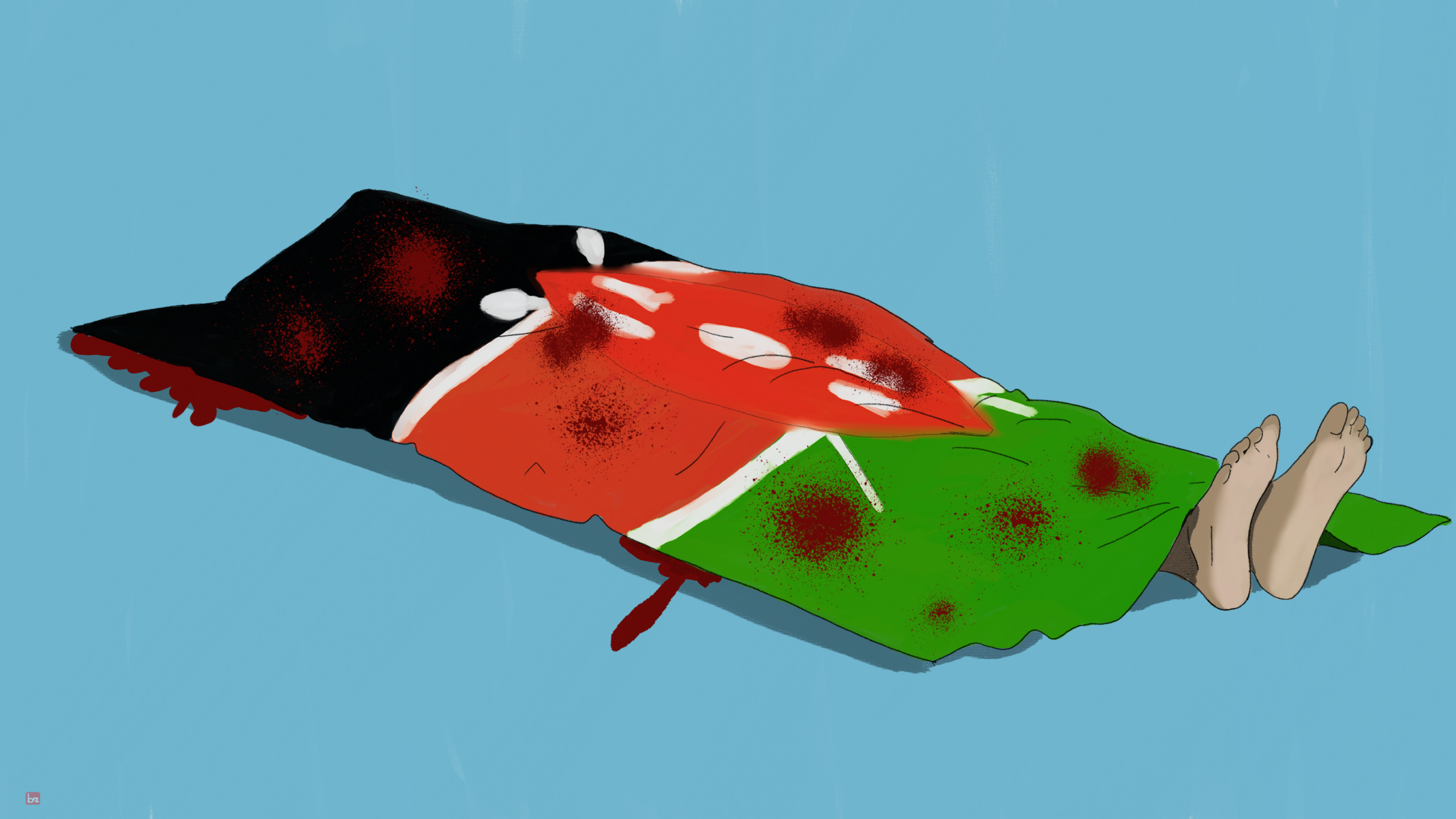
We buried our cows and said a ritual prayer to call upon our ancestors to come and see what had befallen us. In our glory days, this was worth a sacrificial ritual to punish whoever wronged us like this. But not even the right to seek vengeance was within our reach. What a pity we have become! We cried to our saints and said their names. To come and give us wisdom, and perhaps warmth from the anguish in our hearts. The entire community was at a wake, mourning, which was unusual because we are not people who mourn death. We are people who celebrate death by slaughtering the bravest cows and making Gesuda beverages, then gathering to rejoice in a life worthy of remembrance. We are people who do not look at the aftermath of death with sadness. Instead, we happily accept a new spirit to be bound to our land and to protect us. But on this day, we were all mourning death with immense sadness in our hearts. Because cows add and complete a Datooga’s life cycle. Cows are not to be killed for nothing. Even an enemy becomes an enemy for something. But our cows were murdered, for what? What do you say to a Datooga who has lost all of their herds? Nothing! You either give them some of yours or join in to avenge.
“The grass is green everywhere. We do not disturb nature.” My husband held my hand, or, rather, tried to calm me down.
I looked away from him and stared into the greenery all around us. We are not allowed to make trouble when it is green everywhere, according to the rule of our ancestors. One has to wait until it is brown and dry, and herding is far from home, to avoid putting our cows in danger. But out here in these foreign lands, it is green every day, all year round. Was I disappointed or understanding of my husband? I felt conflicted. I know my father would not have let anything like this fly. My husband, on the other hand, is the complete opposite of my father. Many men of my tribe are completely opposite on this side, far, far away from home. For starters, there are no longer any active blacksmiths within our communities. Maybe that is how we have managed to stay alive, I don’t know. All I know is that, with every land we lose and every eviction we face, so do the parts of who we are. Perhaps we are slowly getting erased.
None of our neighbours came to console us. Not even the women I helped conceive. Perhaps the gunshot sounds scared them, too. Perhaps they were rejoicing at the death of our cows—their farms were ‘safer’ with our cows gone, I assume. They have always loved what we could offer: our products and knowledge. Always coming to us for help to solve what they did not know how to. But we all know they complain about our presence behind our backs. They believe we are invaders here, the ones who ‘don’t belong’.
When the burial of our cows was completed, my husband and the few elders of our community went to open a case with the police. When they came back, they said they were told there would be an investigation. My husband said that the police laughed as they said the word ‘investigation’. We all understood that no government official was going to waste their time over some animals. A few days later, a letter arrived, summoning my husband to the government offices. He left immediately, leaving all of us anxiously waiting. When he returned, his head was hanging. We all rallied up, enclosing him in a semi-circle, outside the home of our eldest member.
“They are going to build a dam. They say they need all these lands for agriculture,” my husband announced.
All of our faces fell. Not that we had hopes, but we did not expect the news to be that bad. People let out all kinds of sounds. From asking where we would go next to outright crying. Some stood up and left the meeting. It was angrily frustrating because, as much as we knew it was unfair, we also knew that it was happening again, for the third time!
This is how it always starts; the government declaring our lands theirs, and our existence a criminal offence. When we were in Kilosa, we learned of our ‘criminal-existence’ through a radio as our president announced boldly on national outlets, “Our people must change from being nomadic cattle herders to being settled modern livestock keepers! …” With that statement, he declared our ways of life incomprehensible and unwelcomed – thus unallowed. It condemned us to a life of having to justify our existence everywhere. And within just two years, the statement was on full implementation. We were told we needed to make room for rice farms, a food of no value to us. Some of my people said that, even those white men who began this war against our existence, were now on our side. So, we began hoping that perhaps we would be able to have a claim without being criminalised. After all, who else was to fight our own government and win if not the white men? We prepared to claim just part of Kilosa lands as ours. We resisted fiercely, and as a result, our government officials showed up at our houses unannounced. They burned down our houses. They badly beat our people. They shot our cows like a sport, to teach us a lesson. They raped us women to hurt my community at our core. And they killed our best fighters who dared to stand up for our community. A lot of my people disappeared in that scuffle, and no one has ever heard from them again. It became the Hanang evictions of the 70s happening all over again, in the 2000s. We were evicted from Kilosa. Just like Hanang, we left Kilosa running for our dear lives. It has only been four years since our arrival in the Kilombero valley. We have not yet recovered from the loss we incurred in Kilosa. And now what?
A Datooga’s way of life has to be one with nature. That is why we cannot even begin to explain the anguish of having such a bond forcefully cut out of our lives, over and over and over. For instance, my uncle never agreed to leave Hanag. He’d wanted to stay and fight. His choice was to face death, but my father, being his eldest and only brother, forced him to leave. Even after all the years he lived in Kilosa, he never let go of Hanang. So much so that when death came knocking at his door, he requested to be buried back home. He said he wanted to be among his people. This was in the 1980s. So, right after his spirit left his body, the men of my community organised a sneak-in into Hanang. They took my uncle’s body, wrapped him in the skin of a strong black bull, and travelled with him to where our former burial lands were at – Bassotu, Hanang. According to these men, they arrived at Hanang early in the morning, and had time to make some Gesuda, our sacred beverage. Who knows if they really did all that or wished so badly they believed they did! They told us that they waited till midnight to sneak in so that they could bury him and give respect to our elders buried there, perhaps asking for wisdom and blessings as well. However, the white man’s security guards caught them and handed them to government officials. Our men were put in jail for trespassing. I don’t know how one can trespass on their own land, but my people went to jail for wanting to pray and bury their loved one on our own burial lands.
When we heard the news, we were so shocked that we went numb. We had to organise, sell our cows, bail our people out, and bring them back to Kilosa. The devastating, cruel act left us all in the community, paralysed! It is one thing to forcefully take our land, kill us, kill our animals, and violently evict us. It is another thing to deny us a chance to even pray on where our shrines still stand – our holiest space, Bung’edinga, the graves of our saints. We had to have an emergency meeting to discuss what to do. What does one do when they are denied even their rights to spiritual connection? No one has ever talked about what ended up happening to my uncle’s dead body. I would like to think his spirit now lives in parts; here with me as my protector, and there with our people in eternal joy.
When my mother’s time was near, she insisted that she should not be taken back to Bassotu, Hanang. Not because she did not want to go back home, no. She was just too tired and resigned. She did not want to bother anyone. So, we buried her in Kilosa. We buried her in a land foreign to her spirit, hoping perhaps, after two decades of living there, we could make a home out of that land. Several of my people also opted to bury their loved ones in Kilosa, hoping to plant new spirits on a land we thought could be ours. However, when the eviction from Kilosa came, and we were once again forced to flee, we left some of the spirits we had planted on that land. I left my mother in what is now a farm. If I go back today, I won’t even recognise the plants which have parts of my mother’s bones. She has become a spirit with no life to protect.
Four decades have passed since our eviction from Hanang, Manyara. My people still continue to try to sneak into Bassotu for prayers and burials, because that was where we laid all of our beloved saints. We now guess locations because our Bung’edas have been destroyed. A lot of people from my community, from different places within our country, still meet at Bassotu-Hanang when we go for prayers and rituals. Here in Kilombero, we are just as lonely as my mother’s spirit in Kilosa. For the past four years that we have been inhabiting this valley, we have not buried a single body of our people here. And as we stand here today, in 2013, on a land with no spirits of our ancestors to consult, my people are in anguish. We have nowhere to go. We don’t know what to do. And no one is coming to our rescue.
My father used to say that a Datooga’s way is to live in constant movement across the same lands, because a Datooga is one with nature. And that, while a Datooga woman holds the power to bless both the land’s and the animals’ fertility, a Datooga man marks all of his land with spirit protectors because Datoogas do not live on a land with no spirits of their own. That’s why we are people who build homes for our most honoured elders when they die, and plant the tree of peace. We call that home, Bung’eda. We are people who turn our beloved into our saints who protect us. We don’t discard our dead; we live among them. They become our markers on land for when we come back, so that we can know where we are protected. So that we can know where home is.
Hanang was and still is our home. No matter how much the government turns a blind eye, no matter how much the white man destroys it. That’s the keeper of our spirits, and that’s where we belong. Our ancestors had already marked that land long ago. Long, when they arrived after that biggest exodus from Serengeti, where they fought the Maasai for grazing lands. No matter what happens, the spirits of our land are bound to return us home. I long for that day when I can sleep peacefully knowing that the spirits of our people are watching over us. To my people, Hanang wasn’t just a piece of land to factorise from. Hanang was alive, and it was our duty to nurture it, to keep it healthy, to keep it alive. That’s why we moved every time we felt the land was beginning to feel overwhelmed, only to come back when it had calmed down.
Out here, the nights are cold with absence. We don’t feel connected to these strange lands. According to my husband, this time they are calling it ‘Operation Save Kilombero Valley.’ Once again, we are standing right where my father stood the last time I saw him. We are right back when I was, forty years ago, just a pre-teen girl saying goodbye to my father. Once again, we don’t belong. We have to leave. To where? I don’t know.
We are the Datooga of Tanzania. Our name means a community. We are what you all call us: Barabaig, Mang’ati, and Taturu. Just because our way of life doesn’t align nor conform to the national identity does not mean we do not exist. We have been here, and we are still here, despite the silent erasure of our communities and the consistent alienation from our lands. As I stand here today, watching my people lose their minds over a new land that would welcome us, it’s been more than fifty years – yes! – of watching my people doing the same exact thing: pack and leave; not knowing where to settle. We are now dispersed everywhere across Tanzania, with no one place to belong. With every breaking of our community is the breaking of our identity. But we know where our home is because we marked those lands a long time ago. Our spirits still dwell in them. Every now and then, we go back to visit them. As our ways require us to move, we are still moving, and one day, we will arrive home—the land with our spirits.
Halima Geuya is a writer, educator, and researcher from Tanzania whose work moves between stories, memory, and refusal. She is drawn to the quiet and the unfinished work of decolonisation. Through fiction and nonfiction narratives, she explores how history lives in bodies, landscapes, and language. Her current research traces women’s participation and presence in the history-making of Tanzania, guided by feminist and indigenous ways of knowing. Her creative practice often returns to the question of: what do we inherit, and what do we refuse? Her practice is grounded in her commitment to feminism and decolonial ways of knowing.
Cover credit: Ebumnobichukwu Agu.